
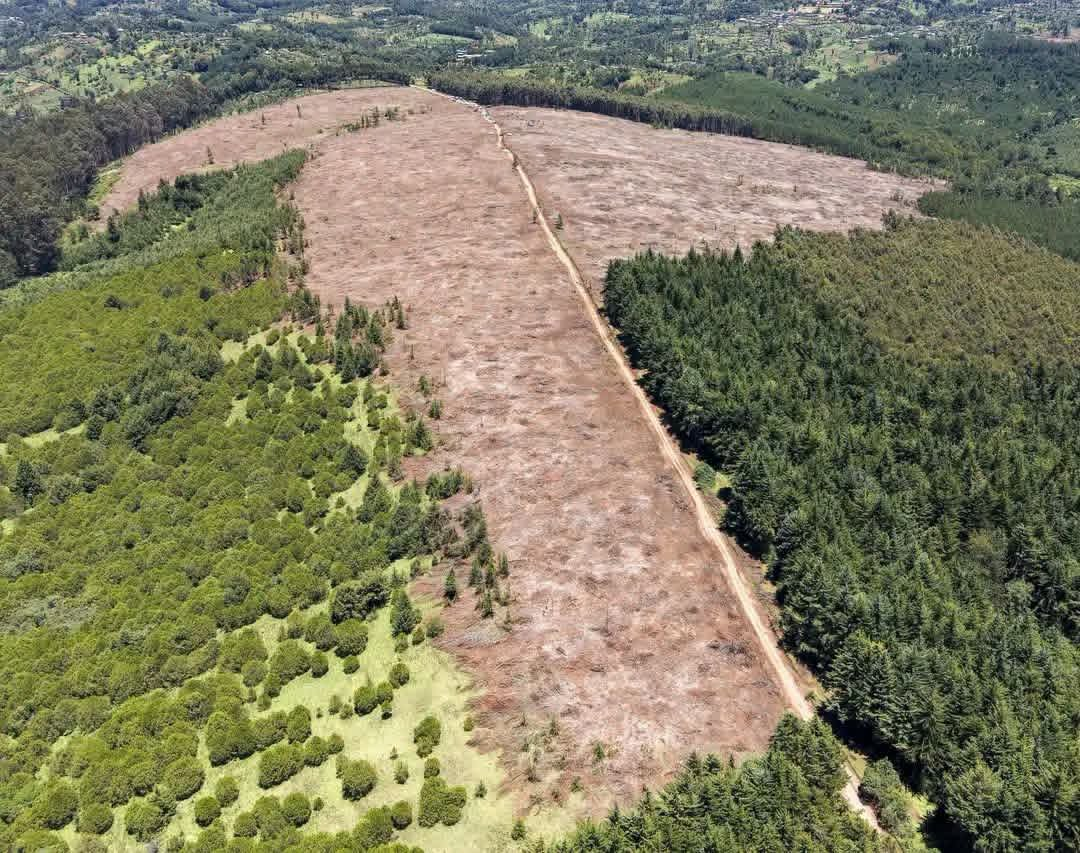
A Kenyan court has prolonged orders that completely halt all logging and timber transport in Aberdare Forest after a judge’s site visit uncovered extensive tree felling by both licensed operators and illegal loggers. The ruling keeps the forest closed to commercial timber activity while the underlying case continues.
The inspection took place after environmental petitioners raised alarm over accelerating damage inside the forest, linking the clearing to the drying up of key rivers, including the Malewa. Kipipiri MP Wanjiku Muhia joined the judge and other officials on the ground, where they observed large areas of felled trees that went beyond what many had anticipated from permitted plantation work alone.
The petition that triggered the case argued that unchecked logging was undermining water sources that communities downstream rely on. During the visit, the court saw firsthand the scale of recent felling, prompting the extension of the existing stop orders. These orders prohibit both the cutting of trees and the movement of any timber out of the forest until further notice.
Sawmillers have maintained that their operations are limited to mature trees inside designated plantation areas and are carried out strictly under approved management plans issued by the relevant authorities. They argue that plantation harvesting is a regulated activity separate from the destruction of indigenous forest, and that a blanket ban unfairly penalizes compliant businesses.
Residents and local leaders, however, say the distinction is hard to enforce on the ground. They are pressing county governors and police to step up patrols and prosecutions, warning that illegal operators continue to exploit gaps in monitoring even as licensed work is under scrutiny. Many point to the condition of rivers such as the Malewa as visible evidence that forest cover is being lost faster than it can recover.
Aberdare Forest forms part of Kenya’s critical water towers, feeding rivers that support agriculture, households, and wildlife across several counties. Prolonged drying of these waterways has heightened concerns among communities that depend on them for irrigation and domestic use, especially during dry seasons.
The court is expected to hear further arguments when the matter resumes on November 11. Until then, the extended orders remain in force, effectively freezing all commercial logging and timber movement in the forest while the judge considers longer-term measures to balance plantation management with the protection of natural water sources.
The outcome of the case is likely to influence how similar disputes over Kenya’s water towers are handled, as pressure grows from both communities worried about vanishing rivers and operators who say regulated plantation harvesting should continue.