
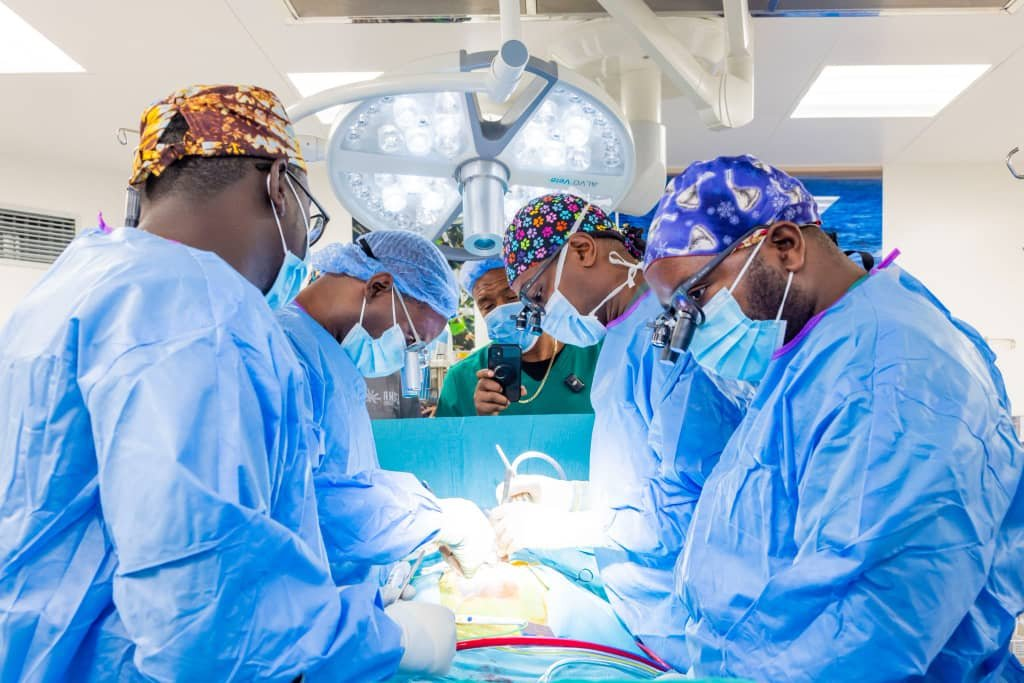
Nairobi, October 2026 — Kenyatta National Hospital (KNH) has achieved a major medical milestone after successfully performing what it describes as Africa’s first-ever tubeless tracheal reconstruction, restoring clear breathing and voice to a young Kenyan man who had struggled for nearly two decades.
The five-hour operation took place on 24 September 2026 at the hospital’s Prime Care Centre on 26-year-old Dennis Kaiser Omondi, a retailer from Kisumu. Omondi was diagnosed in 2008 with a benign (non-cancerous) adenoma in his windpipe. Over the years the growth caused progressive narrowing of the trachea and the formation of a fistula—an abnormal opening between the windpipe and the skin of his neck—severely restricting airflow, affecting his voice, and limiting everyday activities such as walking long distances or climbing stairs.
A pioneering technique
Unlike conventional airway surgery, the procedure was performed using a tubeless technique that kept a standard breathing tube out of the surgical field. This gave the surgeons clearer visibility and better access to the affected section of the trachea. A bronchoscope (a small flexible camera) was used to precisely identify and remove only the diseased tissue while preserving healthy sections.
The multidisciplinary team, led by consultant cardiothoracic and vascular surgeon Dr Joseph Mutie, working with ENT specialist Dr Ruel Maina and consultant anaesthesiologist and intensivist Dr Caroline Abuya, carefully excised the narrowed portions of the windpipe, closed the fistula, and reconnected the healthy ends of the trachea. Omondi continued to breathe naturally throughout the operation, with close coordination between the surgical and anaesthesia teams ensuring adequate oxygenation.
Dr Mutie described the approach as a significant advance: “This technique, the first in Africa, gives surgeons a clearer view of the affected windpipe, helping them work more precisely when treating complex airway conditions. It is an important step forward in the treatment of these conditions in Kenya.”
KNH noted several advantages of the method, including reduced trauma to the delicate lining of the windpipe, faster healing, a simplified procedure, and shorter operating time.
Life-changing outcome
Following the surgery, Omondi was discharged and has reported clear improvements in both his breathing and voice. He has resumed daily activities, including running his retail shop in Kisumu, and can now climb stairs with greater ease. He continues to receive follow-up care at the Prime Care Centre.
The hospital said the breakthrough demonstrates Kenya’s growing capacity to deliver highly specialized care that patients might otherwise seek abroad, reinforcing KNH’s role as a leading national and teaching hospital. The achievement has been widely welcomed as a landmark for airway surgery on the African continent.