
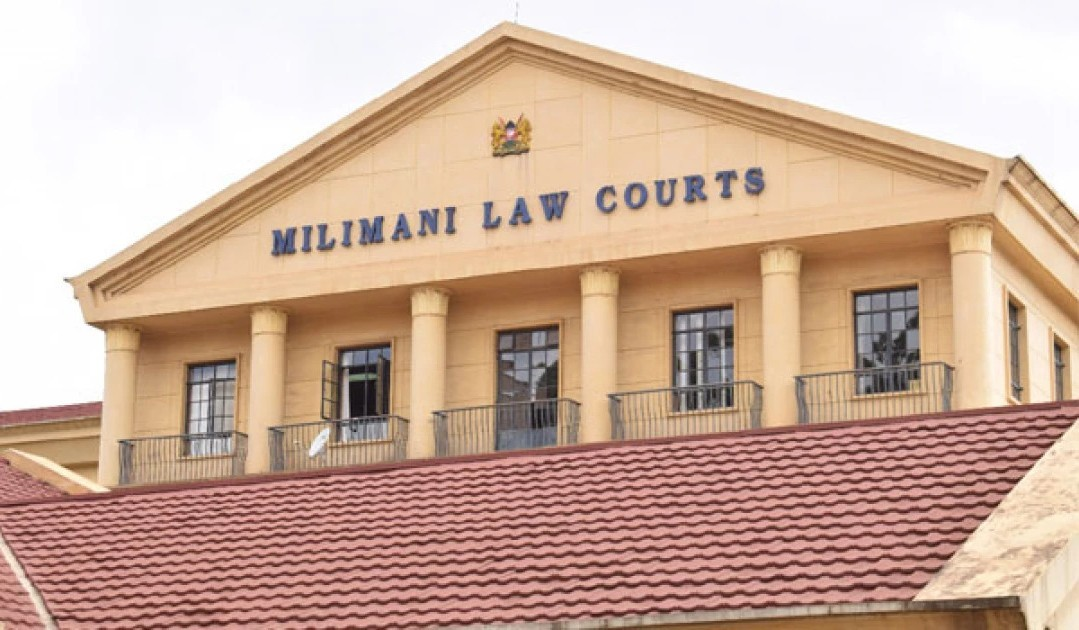
Foreign visitors to Kenya must hold travel health insurance with cover of at least $50,000 (about Sh6.4 million) after the High Court dismissed a petition challenging the rule and found that Health Cabinet Secretary Aden Duale acted within the law.
High Court dismisses the insurance petition
Justice Francis Rayola Olel, sitting in Marsabit, dismissed the constitutional petition and upheld Gazette Notice No. 11492 of 30 July 2026. The notice requires non-Kenyan visitors intending to stay for less than 12 months to carry inbound travel health insurance with a minimum cumulative benefit of $50,000.
The same court had earlier suspended enforcement of the notice pending the full hearing.
Petitioners’ objections and the court’s findings
The petition was brought by Marsabit residents, including businessman Edow Issack Mohammed and activist Zhulekha Mohamed Edin. They argued that the requirement was unconstitutional, ambiguous, and introduced without a proper administrative framework.
They also said the Ministry of Health was effectively setting an entry condition that belongs to the Ministry of Interior and the immigration service, and raised concerns about how insurance data would be handled through the electronic Travel Authorisation (eTA) system.
The court rejected those claims. Justice Olel held that section 26(6) of the Social Health Insurance Act, 2023, already requires non-Kenyan entrants to hold travel health insurance designated by the Cabinet Secretary for Health, and that the 2024 regulations specify the categories of cover.
Immigration officers, the judge found, only confirm compliance; they do not license insurers. Privacy objections were dismissed as unsubstantiated in light of safeguards under the Data Protection Act and the Digital Health Act.
The court also noted that an administrative framework for the programme had been prepared in November 2025, before the gazette notice. Each party was ordered to bear its own costs, the court treating the case as one of public interest.
Minimum travel health insurance benefits
Under the notice, the $50,000 figure is the minimum value of benefits, not the premium a visitor must pay. The prescribed floors are $20,000 for medical expenses, $25,000 for emergency medical evacuation, $5,000 for repatriation of remains, $1,000 for mental health treatment, and $300 for prescribed medicines.
In an August clarification, the Ministry of Health said travellers may use a policy bought in their home country if it meets those limits, and upload proof through the eTA system.
Tourism industry concerns
The rule has drawn criticism from parts of the tourism industry, which described the timing as awkward, and from the Consumers Federation of Kenya, which has separately questioned public participation and how insurers were selected. Those broader disputes sit outside the petition the Marsabit court has now dismissed.
What the ruling means for foreign visitors
For short-stay foreign visitors, the practical effect of the ruling is that the insurance condition is back on a lawful footing. Travellers should confirm the current eTA checklist before departure, because compliance is checked at the point of authorisation rather than only on arrival.