
Abiy Ahmed Sworn In for a New Term as Ethiopia’s Prime Minister
Addis Ababa — Ethiopia’s House of Peoples’ Representatives on Monday, 5 October 2026, appointed Abiy Ahmed as prime minister for a new five-year term and swore him in, completing the formation of the federal government after the 1 June general election.
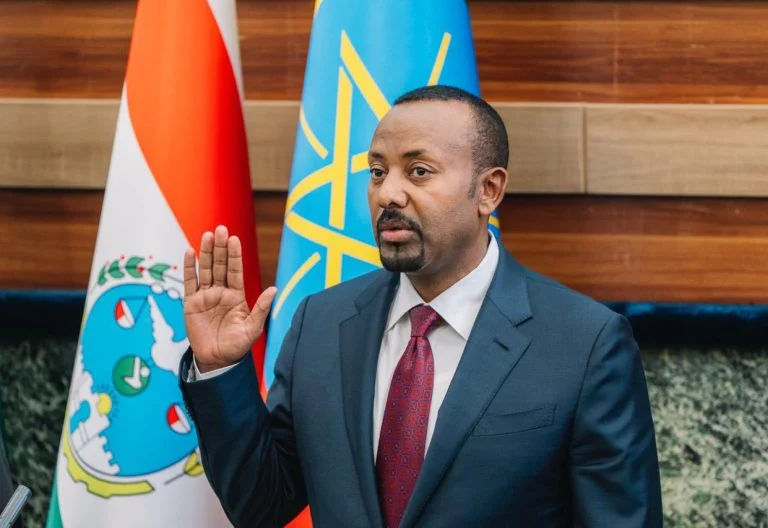
The appointment came as the newly elected House opened the first session of Ethiopia’s seventh parliamentary term. Key leadership appointments made during the session include:
- Ahmed Shide elected as Speaker of the House of Peoples’ Representatives.
- Ayelech Eshete elected as Deputy Speaker of the House of Peoples’ Representatives.
- Muferihat Kamil elected as Speaker of the House of Federation.
Abiy Ahmed appointed and sworn in as Prime Minister.
Under Ethiopia’s constitution, the prime minister is not chosen by a direct popular vote. The party or coalition that holds a majority in the House of Peoples’ Representatives forms the government, and the House elects the prime minister from among its members. Abiy, in office since April 2018, was the candidate of the ruling Prosperity Party.
That party won 438 of the 486 contested seats in the 547-member House, according to results released after the June poll. Voting was not held in Tigray and was disrupted in parts of Amhara and Oromia because of insecurity. The National Election Board of Ethiopia said more than 54 million citizens were registered for the election.
After taking the oath, Abiy described the day as historic and stated that the new term would prioritize key areas including national unity, security and stability, infrastructure, and economic transformation.
“He likened the election to ‘gold refined through fire,’ arguing that the country had emerged stronger despite the challenges around the vote.”
President William Ruto’s Congratulatory Message
President William Ruto congratulated Abiy on Tuesday, addressing him as a brother and tying the new mandate to closer Kenya–Ethiopia cooperation.

“Congratulations my brother, Prime Minister Abiy Ahmed, on your re-election to lead Ethiopia for a second term. Your new mandate by Ethiopia House of People’s Representatives is a vote of confidence in your leadership and vision you have for your country… Kenya looks forward to continuing working closely with you to advance our shared interests for the mutual benefit of our peoples.”
The message follows a visible stretch of bilateral contact. On 30 September, Abiy joined Ruto in Lamu for the groundbreaking of the planned Lamu refinery, a project Ruto has framed as an East African investment linked to the LAPSSET corridor and to wider energy and industrial cooperation. Ruto thanked Abiy at the ceremony for making the trip, saying the project mattered to Kenya, Ethiopia and the region.
In addition to President Ruto, several other regional leaders sent congratulatory messages:
- Taye Atske-Selassie, President of Ethiopia
- Workneh Gebeyehu, IGAD Executive Secretary
- Évariste Ndayishimiye, African Union chair and President of Burundi
- Hassan Sheikh Mohamud, President of Somalia
A Mandate Under Strain
The new term opens against renewed fighting in northern Ethiopia, the most serious escalation in Tigray since the 2020–2022 war. Federal and allied forces entered Mekelle, the regional capital, in the days before the parliamentary session, after the Tigray People’s Liberation Front said it was withdrawing. Reports from the region also described strikes on a camp for displaced people. Addis Ababa has accused neighbouring states, including Eritrea, of backing armed groups, and Ethiopia has announced the closure of its embassy in Asmara. Those claims remain contested.
For Nairobi, the immediate interest is practical. Ethiopia is Kenya’s largest neighbour by population, a major trade and power partner, and a central player in IGAD and Horn security. Ruto’s note keeps the public line on cooperation — trade, infrastructure, energy and regional stability — even as Abiy’s second-term agenda is again dominated by security at home.