
President Ruto outlines a proposed KSh 32,333 PAYE exemption threshold, higher dairy prices, mobile import tax changes and additional Hustler Fund support.
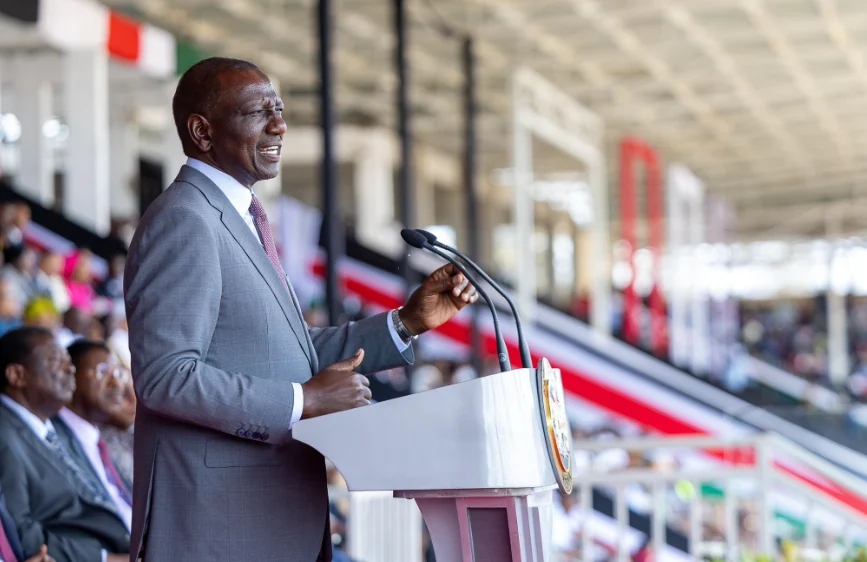
ELDORET / NAIROBI, Kenya — In a major policy rollout following the 63rd Mashujaa Day celebrations at Kipchoge Keino Stadium in Eldoret, President William Ruto’s administration has announced an aggressive suite of fiscal interventions and agricultural market adjustments designed to bolster household disposable income and spur bottom-up economic productivity.
Facing persistent public debate over living costs and tax obligations, the Head of State used his national address and subsequent treasury briefings to lay out immediate tax relief directives for low-wage earners, structural adjustments to the agricultural supply chain, and targeted interventions aimed at expanding digital and financial inclusion across the country.
SUMMARY OF NEW ECONOMIC & TAX DIRECTIVES
| Policy Measure | Key Implementation Details |
|---|---|
| PAYE Tax Exemption Floor | Raised to KSh 32,333/month |
| Farmgate Milk Price | Increased to KSh 65/liter (+KSh 2 Qtr) |
| New KCC Debt Clearance | KSh 400M released by end of Oct 2026 |
| Mobile Device Import Levy | Proposed 25% tax waiver for low-cost |
| Fertiliser Subsidy Program | Sustained at KSh 2,000 per 50kg bag |
Raising the PAYE Threshold for Low-Income Workers
The central headline of the government’s economic updates is a revised legislative proposal to raise the Pay As You Earn (PAYE) income tax exemption floor to KSh 32,333 per month.
The new threshold represents an upward adjustment from an earlier proposed cap of KSh 30,000, effectively shielding hundreds of thousands of formal and informal sector workers from direct income taxation.
Addressing the nation from Eldoret, President Ruto emphasized that the fiscal adjustment is intended to buffer vulnerable wage earners against inflationary pressures while simplifying the tax compliance framework for small employers.
“We have listened to the working people of Kenya, and we recognize that our recovery must start by putting money back into the pockets of those who earn modest salaries,” President Ruto declared.
“By raising the PAYE exemption limit to KSh 32,333 per month, we are ensuring that formal workers at the lower end of the wage scale retain 100 percent of their hard-earned salaries to support their families and manage their daily living expenses.”
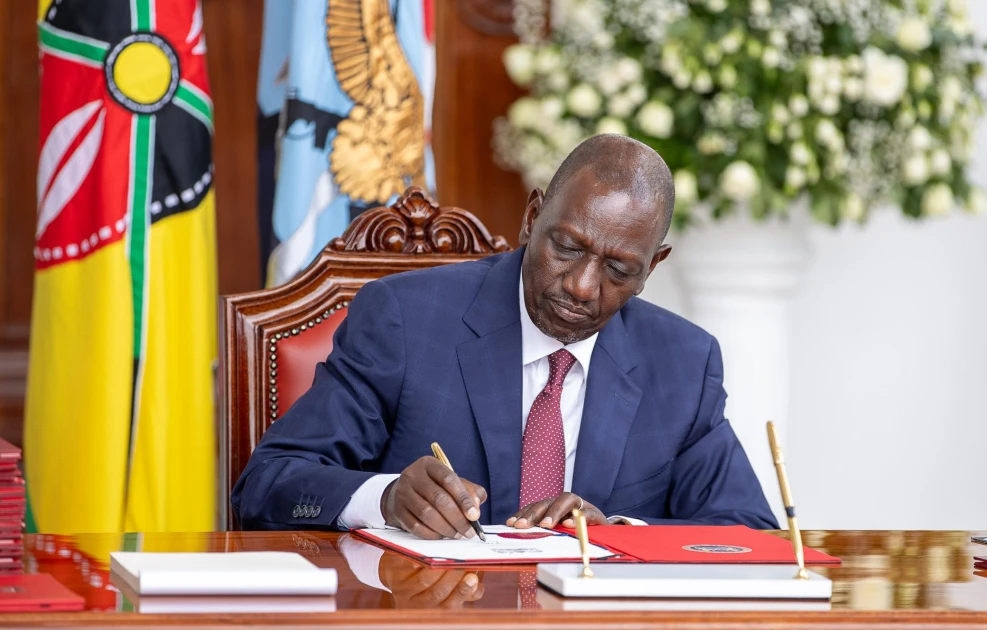
The National Treasury has been instructed to table the corresponding statutory amendments before the National Assembly immediately.
Under the proposed structure, the shift will build upon the existing personal tax relief allocations, insulating formal entry-level staff, domestic workers, private security personnel, and agricultural farmworkers from direct statutory income deductions.
A KSh 65 Dairy Floor: Revolutionizing the Farmgate Price
For Kenya’s agricultural sector—the primary engine of rural livelihoods—the government delivered a major policy win for dairy farmers by setting a new minimum farmgate milk price of KSh 65 per liter, effective immediately for the month of October 2026.
The new rate marks a notable increase from previous buying rates of KSh 60 per liter (and nearly double the historical low rates of KSh 35 per liter recorded in previous years).
Furthermore, the state announced an additional performance and quality bonus of KSh 2 per liter, which will be calculated monthly and paid out directly to farmers on a quarterly basis.
To ensure the new pricing floor is backed by state liquidity, President Ruto pledged that the National Treasury will clear KSh 400 million in outstanding historical debt owed to dairy farmers by the state-owned New Kenya Co-operative Creameries (New KCC) before the end of October 2026.
“Our dairy farmers are the backbone of our rural economy, yet for years they have suffered from price volatility, delayed payments, and high animal feed costs,” Ruto told cheering crowds in the Rift Valley region.
“With a guaranteed price of KSh 65 per liter, plus our quarterly bonus structure, we are turning dairy farming from a struggle for survival into a commercially lucrative business.”
Government data presented during the national address indicated that national milk production has grown by over one billion liters over the past two financial years, driven largely by subsidized livestock feed programs and AI breeding initiatives.
The higher farmgate price is expected to stimulate increased rural investment, particularly in dairy cooperatives operating throughout the Rift Valley, Central, and Western regions.
Digital Mobility: Scrapping the 25% Mobile Import Tax
In a move tailored to Kenya’s rapidly expanding tech ecosystem and youth micro-entrepreneurs, the administration confirmed plans to eliminate the 25% import tax on entry-level mobile devices and assembling components.
The policy shift aims to lower retail prices for feature phones and basic smartphones, encouraging digital connectivity among informal traders, agricultural workers, and rural youth reliant on mobile financial services such as M-Pesa for daily transactions.
“Access to a smartphone is no longer a luxury; it is an essential business tool for every mama mboga, boda boda rider, and young entrepreneur selling goods online,” noted Cabinet Secretary for Information, Communications and the Digital Economy.
“By removing burdensome import levies, we lower the entry barrier for millions of citizens, unlocking access to digital markets, e-government services, and financial tools.”
Broader Macroeconomic Outlook and Hustler Fund Expansion
Reflecting on the wider Bottom-Up Economic Transformation Agenda (BETA), the Head of State presented an optimistic assessment of national agricultural recovery.
The national maize harvest reached 71 million bags in 2025—up from 34.3 million bags in 2022—a shift the executive attributed to the registration of 8.9 million farmers and the distribution of over 38 million bags of subsidized fertilizer at KSh 2,000 per bag.
Additionally, the state announced plans to inject an additional KSh 5 billion into the Hustler Fund before the end of 2026 to support interest-free and low-interest credit for small micro-enterprises.
With over 10 million regular borrowers having accessed KSh 98 billion to date, the additional capital injection aims to sustain micro-business liquidity amid changing global economic conditions.