
Maryland, USA — November 25, 2026
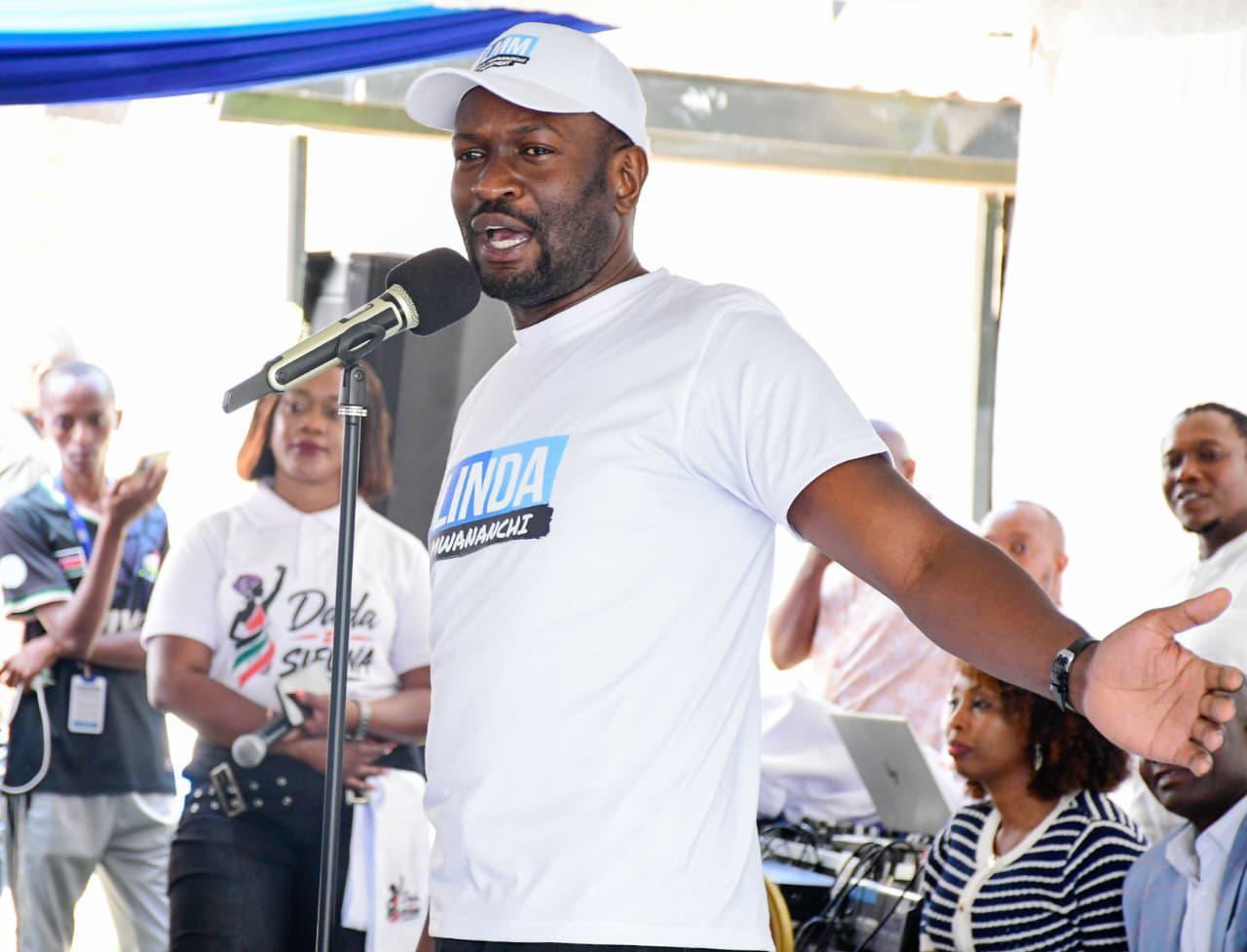
Nairobi Senator and Linda Mwananchi Movement leader Edwin Sifuna used his address to Kenyans in the diaspora in Maryland to detail the events that led to his fallout with the Orange Democratic Movement (ODM), framing his departure as a matter of principle rather than personal ambition.
Speaking during the Linda Mwananchi Movement’s United States tour engagements, Sifuna recounted his reluctant role in drafting the political agreement that governed ODM’s relationship with the United Democratic Alliance (UDA). He said the pact was originally designed to stabilize the nation and protect human life amid widespread street demonstrations following the 2024 protests.
“I was the person, unfortunately, who was charged with drafting this agreement that was going to govern this relationship, and I feel that I stayed true to what I believe in,” Sifuna told the gathering.
He outlined two non-negotiable pillars he wrote into the document: an immediate halt to extrajudicial killings and abductions of young people and an independent inquiry into the events of June 2024. The agreement, he emphasized, explicitly required that police officers responsible for the deaths of young people be held accountable under Kenyan law.
“I wrote into that agreement that we were no longer going to experience abductions and killings of young people. We were going to have an independent review of the happenings of June 2024, that police officers who are responsible for the killings of young people would be held to account in accordance with our laws,” he explained.
Sifuna said he publicly declared the agreement dead on television after the death of Albert Ojwang, a young man who was transported more than 400 kilometers from Homa Bay to Nairobi and died in police custody. He argued that once the state failed to uphold the sanctity of life, the arrangement lost all value.
“If we were going to sustain the democratic state, we needed to sustain life, and there was no compromise about that on the day that they killed Albert,” he stated. He has previously linked the incident directly to the beginning of his problems within ODM, noting that police officers traveled from Nairobi to Homa Bay to arrest Ojwang.
Addressing the broader political split, Sifuna said tensions arose when certain colleagues misinterpreted the UDA engagement as an opportunity to access state perks and enrich themselves. He maintained that fully backing President William Ruto’s re-election bid was never part of the original understanding, and he rejected that path.
“There are people who mistook whatever agreement we had with UDA, and they thought it was time for us to get involvement and get comfortable and gorge ourselves on public resources and so on and so forth. I was not of that thinking,” he noted.
Sifuna also pushed back against advice that he soften his tone and personality ahead of the 2027 election. He insisted he would not pretend to be someone else to win votes, describing himself as someone who has never kept quiet in the face of wrongdoing.
“People think I need to be nicer. They think I must be polite to be elected president. I do not know which version of me is the nice version,” he said. “These days I am told we like you better when you are quiet, when you do not answer people back, and when you do not engage.”
He added that he was not above pettiness when confronting falsehoods, pointing out that the constitution of the Linda Mwananchi Movement mirrors that of ODM and obliges leaders to combat misinformation and bad things. “I have honestly before God; I have never been a nice person. I have never been a person to keep quiet when I feel that something is wrong… I don’t have cards that I hide under the table. What you see is what you get.”
Beyond the fallout, Sifuna outlined the vision for the Linda Mwananchi Movement as a vehicle to return Kenya to the six foundational values in the Constitution’s preamble—democracy, freedom, rule of law, equality, and social justice. He criticized high living costs, noting that 51 shillings of every 100 spent on electricity go to taxes, linked high energy costs to corruption in Power Purchase Agreements from the 2009 El Niño period, and faulted the Social Health Authority for measuring success by registration numbers rather than service quality. He also warned that electing leaders facing corruption or court cases sends a signal that legitimizes theft and projected that a united opposition could secure 75–80 percent of the vote, leaving Ruto with “no path to power.”
Sifuna’s remarks in Maryland come weeks after his removal as ODM Secretary-General and the loss of his Senate leadership role, amid ongoing party disputes that intensified after the death of longtime ODM leader Raila Odinga. He has since positioned the Linda Mwananchi Movement as an alternative and signaled a 2027 presidential bid while continuing to engage diaspora communities as part of a multi-state US tour.