
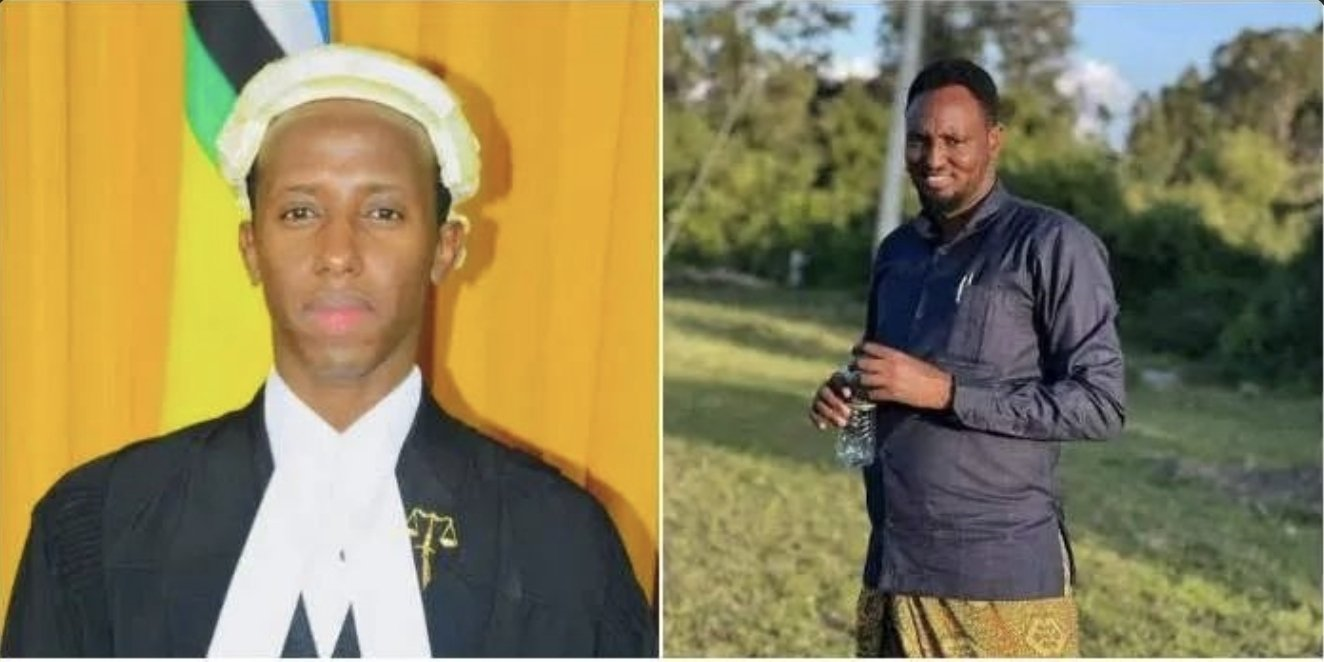
Abshir Ahmedsadak Abdi, a Nairobi-based Advocate of the High Court of Kenya practicing at Abshir & Njagi Advocates in Kilimani, has become a central figure in Kenya’s debate over enforced disappearances, police accountability, and the rule of law. His case, which unfolded rapidly in early November 2026, involved alleged armed abduction, habeas corpus proceedings that summoned top security officials, protests by the Law Society of Kenya (LSK), and his eventual recovery after roughly 11–12 days.
Early Life and Background
Limited public biographical details exist prior to the recent events. One account reports that Abdi was born in Bardera in Somalia’s Gedo region. He and his parents later entered Kenya through Mandera. Details of his childhood schooling, early education, and the precise circumstances of the family’s settlement in Kenya remain sparsely documented in mainstream reporting.
As a practicing advocate, he has completed the standard professional pathway required in Kenya: a Bachelor of Laws (LLB) degree, professional training at the Kenya School of Law, and admission to the Roll of Advocates. Specific universities or graduation years have not been widely published.
Legal Career
Abdi established a practice in Nairobi focused on matters that intersected with the Somali business community, particularly in areas such as Eastleigh. He is an Advocate of the High Court and works under the firm Abshir & Njagi Advocates in Kilimani.
He became involved as a complainant and key witness in a criminal case at Makadara Law Courts (MCCR/E2910/2025, Republic v Ahmed Ali Mohamed). The matter involved allegations of obtaining electronic goods worth hundreds of thousands of shillings by false pretences from a businessman in Eastleigh. His family and the LSK have linked subsequent threats and his later disappearance to this role and alleged intimidation by security officers who reportedly pressured him to withdraw.
In October 2025, Abdi was arrested by the Anti-Terrorism Police Unit (ATPU) in connection with investigations into alleged abduction, extortion, and related activities. He was presented before Kahawa Law Courts; the Director of Public Prosecutions declined to approve extended detention, and he was released. Court records and police statements later referenced further interactions and arrests around mid- and late October 2025 as investigators probed claims of an Eastleigh-linked network involving arrests, prosecutions, and financial demands. Police officers appearing in subsequent court proceedings described him as a person of interest in such inquiries, though these remain allegations under investigation.
Social Life and Interactions
Abdi’s public profile rose sharply due to the abduction case rather than prior celebrity. On the evening of October 31, 2026, he attended a friend’s wedding in the Kilimani area and was driving home in the early hours of November 1 when the incident occurred. His brother, Zakaria (also referred to as Zachariah) Abshir, has been the primary family voice, filing the habeas corpus application and speaking to the media.
The case drew high-level engagement. The High Court (Justice Alexander Muasya Muteti) ordered multiple state agencies—including the National Intelligence Service (NIS), Directorate of Criminal Investigations (DCI), National Police Service, Counter-Terrorism Bureau, and others—to produce him “live or dead.” It summoned Inspector General of Police Douglas Kanja and DCI Director Mohammed Amin to account for his whereabouts and any warrants. LSK President Charles Kanjama led advocacy, protests (including purple-ribbon marches to Jogoo House), and public statements. Senior Counsel Paul Muite publicly demanded his release or formal charging. Former LSK president Eric Theuri and other advocates represented family interests in court.
The Abduction, Court Battle, and Recovery
In the early hours of November 1, 2026, armed men in tactical gear allegedly pursued Abdi’s white Toyota Premio (registration KDL 356C) along Muchai Road, off Ngong Road. CCTV footage reportedly showed the vehicle forced into a ditch or drainage area; Abdi was restrained, blindfolded in some accounts, and bundled into a black Toyota Land Cruiser Prado. His car was later recovered abandoned and towed to Kilimani Police Station, where a missing-person report was filed. Phones were switched off.
The family, through Zakaria Abshir, filed an urgent habeas corpus application (HCCRMISCAPPL/E268/2026). The LSK joined as an interested party. Courts ordered production and explanations; security agencies denied holding him and said investigations were ongoing. Police raised the “double life” allegations tied to the earlier extortion inquiries. The LSK organized demonstrations and threatened broader action, framing the case as an attack on the legal profession and the rule of law.
On November 12, 2026, Abdi was found alive in the Sololo area of Marsabit County (reports mention Uran and/or Rawana shopping centres near the Kenya-Ethiopia border), roughly 700 km from Nairobi. Herders or residents discovered him; he contacted family. Police from Sololo escorted him to the station for statements, and he received medical attention at Sololo Level Four Hospital for reported injuries. His colleague or companion Ayub Mohamud Maalim (described as a 27-year-old from Mombasa), was also recovered nearby. Both later returned toward Nairobi. LSK President Kanjama confirmed the development while stressing the need for independent verification, full accountability for any abduction squads, and continued pressure. Family and lawyers described the ordeal as involving detention and mistreatment.
By November 13, 2026, the pair were linked to proceedings at Milimani Law Courts. Abdi was reported to be receiving treatment for minor injuries sustained during the period of absence and the journey back, while Maalim appeared earlier. The National Police Service stated it was investigating the full circumstances and appealed for public information. The habeas corpus matter continued, with the broader questions of who ordered or carried out the seizure remaining unresolved.
Broader Context and Public Interest
Abdi’s case has highlighted tensions between the legal profession’s demand for protection when handling sensitive matters and police claims of legitimate investigations into alleged criminal networks. It has also amplified concerns about enforced disappearances in Kenya. The LSK has vowed to continue street actions and court pressure until full accountability is achieved, while authorities maintain that investigations into both the disappearance and any prior allegations against Abdi are active.
As of mid-November 2026, Abshir Ahmedsadak Abdi is alive, has re-engaged with the justice system, and remains the subject of ongoing inquiries. Public details on his education, personal life, and pre-2025 professional track record are still limited; much of what is known stems from court filings, family statements, LSK advocacy, and police testimony in the recent proceedings. The story continues to develop as investigations and court processes advance.
Also read: