
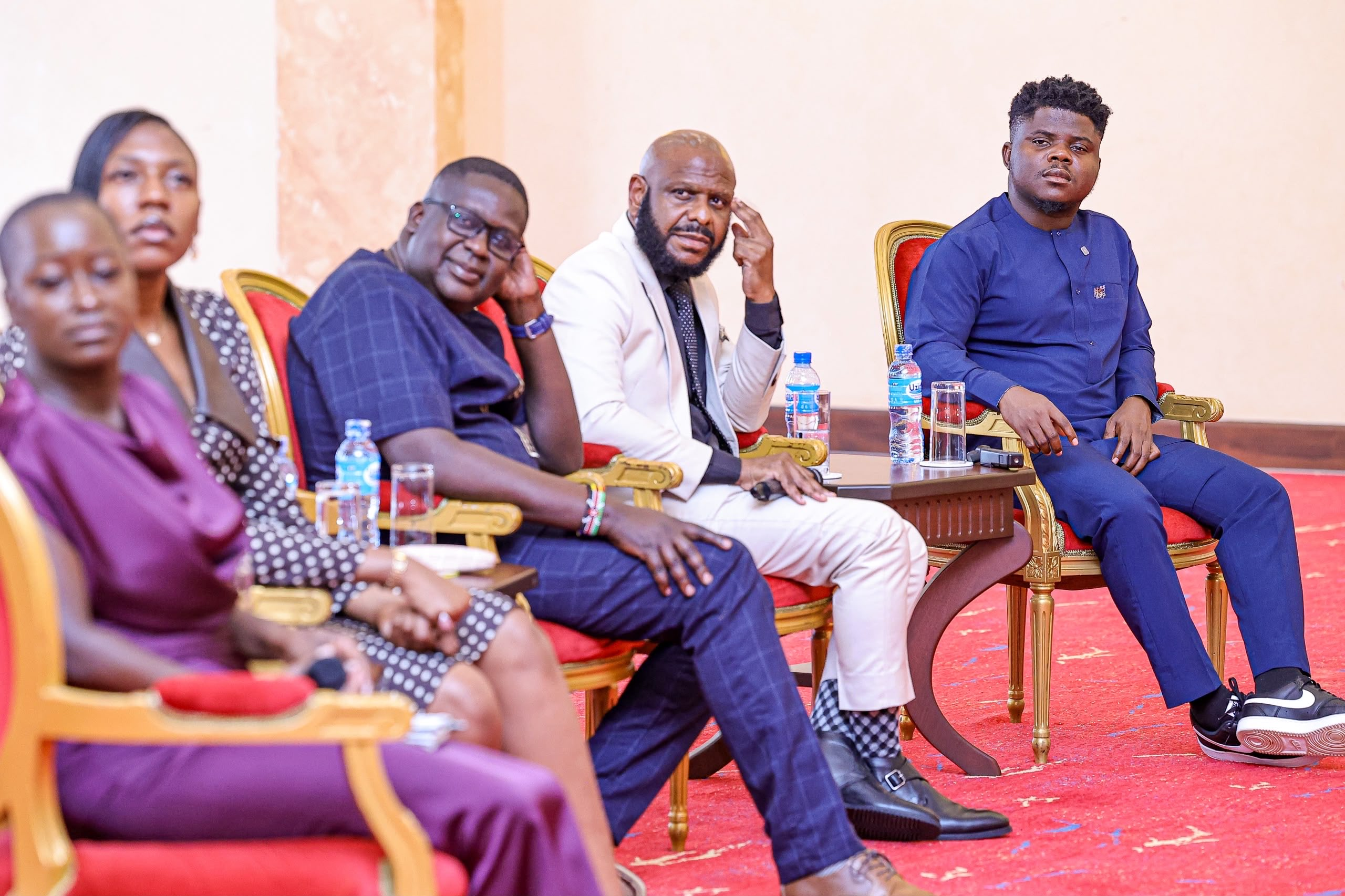
Ugandan President Yoweri Museveni on Thursday, November 12, 2026, hosted a group of prominent African content creators at State House in Entebbe for discussions on Pan-Africanism, digital storytelling, and the continent’s development priorities.
The delegation included Kenyan comedian and media personality Daniel Wambua Ndambuki, popularly known as Churchill; Ghanaian YouTuber Berthold Kobina Ackon, better known as Wode Maya; Tanzanian digital creator and former BBC Swahili presenter Salim Athumani Kikeke; Zambian social media personality Masiliso Mutumba; and Ugandan creator Christine Lynghamar Kia, who is based in Sweden.
Museveni referred to the visitors as his “Bazzukulu,” a Luganda term meaning “grandchildren,” and said he first took an interest in their work during the recent Russia-Africa Summit. He personally invited them for the meeting after following their online discussions on African history, culture, and languages.
In a post on X after the engagement, the president wrote, “Today, I met my Bazzukulu. I encouraged them to continue using their voices and platforms to tell the African story and promote the interests of our people.”
During the discussions, Museveni framed Africa’s progress around those five historical missions. He argued that digital creators have a role that extends beyond entertainment, helping citizens understand the continent’s history, economic priorities, and the need for greater unity and self-reliance. He emphasised production-driven prosperity over aid dependence and called for stronger regional integration.
The creators reportedly expressed interest in Uganda’s industrial developments, including vehicle manufacturing by Kiira Motors, and noted that external perceptions of Africa often lag behind the continent’s actual progress in innovation and economic transformation. They pledged to share insights from the meeting with their audiences and to promote more balanced narratives about Africa.
The meeting comes amid Museveni’s ongoing engagement with young people and digital influencers. Earlier in 2026, he had pledged support for organised Ugandan content creators through a multi-billion-shilling fund channelled via SACCOs, recognising their role in promoting local products and the digital economy.
By bringing together high-profile creators from across the continent, the State House engagement underscores the growing political recognition of social media influencers as key shapers of public perception and advocates for Pan-African ideas in the digital age.