
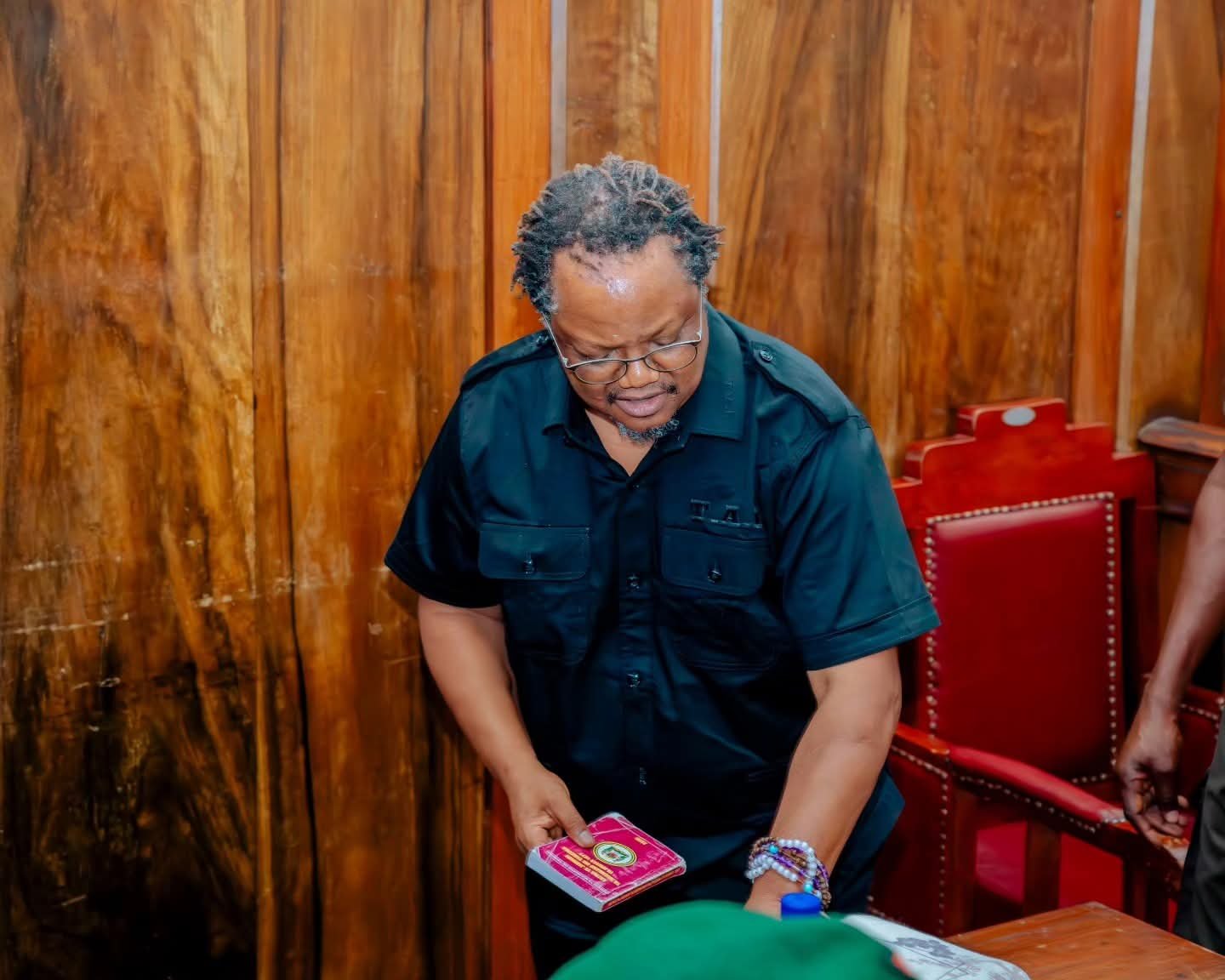
A three-judge panel of Tanzania’s High Court in Dar es Salaam on Friday acquitted main opposition leader Tundu Lissu of treason but convicted him of the lesser offence of incitement and sentenced him to four years in prison. The ruling ends a high-profile trial that lasted roughly 19 months and drew international scrutiny over political freedoms ahead of and after the country’s disputed 2025 general election. bbc.co.uk
Lissu, 58, national chairman of the opposition Chama cha Demokrasia na Maendeleo (CHADEMA), had been held without bail since his arrest on April 9, 2025. Prosecutors charged him under Section 39(2)(d) of the Penal Code in connection with remarks he made on April 3, 2025, at a meeting with party aspirants at CHADEMA’s Mikocheni headquarters in Dar es Salaam. They alleged the statements, which were also circulated online via Jambo TV, were intended to incite the public to disrupt the October 2025 general election and intimidate the government. Treason carries a possible death penalty in Tanzania, though the country has not carried out an execution since 1994. straitstimes.com
The panel, led by Justice Dunstan Ndunguru and including Justices James Karayemaha and Ferdinand Kiwonde, found that prosecutors failed to prove a key element of the treason charge. The judges convicted Lissu of incitement, which carries a maximum penalty of up to five years’ imprisonment, a fine, or both. In sentencing him to four years, the court noted that it had considered mitigating factors, including that he was a first-time offender, and that a fine is ordinarily the preferred option where available, but concluded that imprisonment was warranted in this case. Lissu retains the right to appeal to the Court of Appeal. thecitizen.co.tz
In court, Lissu, a lawyer who represented himself throughout much of the proceedings, rejected the conviction. He told the judges that the incitement offence “is one that you, honourable judges, have manufactured. You have created an offence that did not exist, and you have done so on political directives.” He maintained that his remarks formed part of a legitimate campaign for constitutional and electoral reforms under the slogan “No Reforms, No Election” and that prosecutors had taken them out of context. Before sentencing, he declined to apologise, stating he did not believe he had committed any offence, and raised health concerns stemming from a 2017 assassination attempt in which he was shot 16 times (one bullet remains lodged near his spine). He had also sought bail pending appeal, noting that incitement, unlike treason, is a bailable offence. bbc.co.uk
The case arose amid CHADEMA’s push for changes including independent appointment of electoral commissioners, an end to police intimidation of opposition campaigns, restrictions on government-appointed officials serving as returning officers, unimpeded observation of vote counting by party agents, and the ability to challenge presidential results in court. Shortly after Lissu’s arrest, CHADEMA was disqualified from the October 29, 2025, election for refusing to sign an electoral code of conduct. President Samia Suluhu Hassan of the long-ruling Chama Cha Mapinduzi (CCM) was declared the winner with approximately 97–98 percent of the vote. The election was accompanied by protests in which a government-appointed commission later reported at least 518 deaths; opposition figures and rights groups claimed higher numbers and alleged excessive force by security services. bbc.co.uk
Lissu is a long-standing critic of Tanzania’s ruling party. Born on January 20, 1968, in Mahambe village in Ikungi District, he trained as a lawyer at the University of Dar es Salaam and later obtained an LL.M. from the University of Warwick. He served as Member of Parliament for Singida East from 2010 to 2020, as president of the Tanganyika Law Society, and as CHADEMA’s 2020 presidential candidate against the late President John Magufuli. In September 2017, he narrowly survived an assassination attempt in Dodoma in which gunmen shot him multiple times outside his residence; the attackers have never been brought to justice. He spent years in exile in Belgium before returning in 2023. In January 2025 he was elected CHADEMA national chairman, defeating long-serving leader Freeman Mbowe. en.wikipedia.org
The trial itself featured extended proceedings, including a “case to answer” ruling in August 2026, secret witnesses, disputes over the admissibility of video evidence of the April 3 speech, and Lissu’s decision to conduct his own defence after difficulties accessing counsel. Human rights organisations and foreign lawmakers had previously criticised the treason charge as politically motivated and called for his release. Lissu’s conviction on the lesser charge, after more than a year and a half in pre-trial detention at facilities including Ukonga Prison, is expected to intensify debate about the space for political opposition and free expression in Tanzania. His lawyers and party are expected to pursue an appeal. bbc.co.uk