
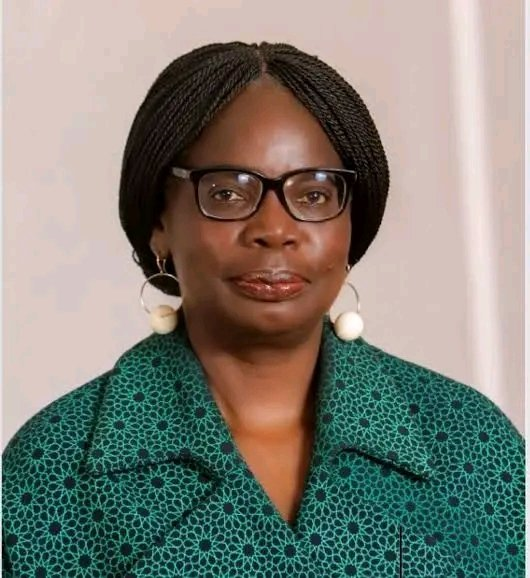
Phoebe Nyawade Okowa is a Kenyan jurist, academic, and practitioner of public international law. Born on 1 January 1965 in Kericho, she has built a career spanning Kenyan legal education, Oxford postgraduate study, decades of university teaching in the UK, service on major UN bodies, and, since 2025, a seat on the International Court of Justice (ICJ)—the UN’s principal judicial organ.Wikipedia
She graduated at the top of her class with a Bachelor of Laws (LLB) First Class Honours from the University of Nairobi in 1987, becoming the first woman to achieve that distinction in the faculty’s history. She earned the Gandhi Memorial Prize and the Kaplan and Stratton Prize. She completed a diploma in legal practice at the Kenya School of Law (1988) and was called to the Kenyan Bar as an advocate in 1990. On a Foreign and Commonwealth Office Scholarship, she studied at Wadham College, Oxford, obtaining a Bachelor of Civil Law (BCL) in 1990 and a DPhil in Public International Law in 1994 under the supervision of Sir Ian Brownlie.Icj-cij
Okowa began her academic career as a lecturer at the University of Bristol before joining Queen Mary University of London, where she became Professor of Public International Law in 2014 and has served as Director of Graduate Studies. She has held visiting positions at institutions including New York University and others in Europe and Africa and has taught for the UN Regional Course on International Law for Africa. Her scholarship focuses on state responsibility (including for environmental harm), the law of armed conflict, accountability, and related fields. Her monograph State Responsibility for Transboundary Air Pollution in International Law (Oxford University Press) is widely cited. She is a joint editor of the Oxford Monographs in Public International Law series. Qmul
Professionally, she has acted as counsel and adviser in proceedings before the ICJ and other tribunals, including for Namibia in advisory-opinion cases concerning Israel’s obligations regarding UNRWA and the Occupied Palestinian Territory, as well as matters involving climate change, maritime delimitation, and the Genocide Convention. She served as a member of the Permanent Court of Arbitration (2017–2022). In 2021, she was elected to the UN International Law Commission (ILC) for the 2023–2027 term, becoming the first African woman to serve on that body since its establishment in 1947; she later chaired its Drafting Committee. Icj-cij
On 12 November 2025, the UN General Assembly and Security Council elected her to the ICJ to fill the vacancy created by the resignation of Judge Abdulqawi Ahmed Yusuf of Somalia. She became the first Kenyan and the eighth woman to sit on the 15-member court, serving the remainder of the term until February 2027. On 3 November 2026, she was re-elected to a full nine-year term (2027–2036), securing absolute majorities in both bodies, 183 votes in the General Assembly and 13 in the Security Council, after several rounds and the withdrawal of other candidates, including Sierra Leone’s Charles Chernor Jalloh. She was co-nominated by multiple states. Her re-election followed an active Kenyan diplomatic campaign. Tuko
Okowa has received distinctions, including the Elder of the Order of the Burning Spear from the Kenyan government and an honorary Doctor of Laws from Stockholm University (2024). She remains on leave from her Queen Mary post while serving on the court in The Hague. Her trajectory—from a first-class Nairobi law graduate to Oxford-trained specialist, ILC member, and ICJ judge—marks a significant milestone for Kenyan and African representation in international adjudication.