
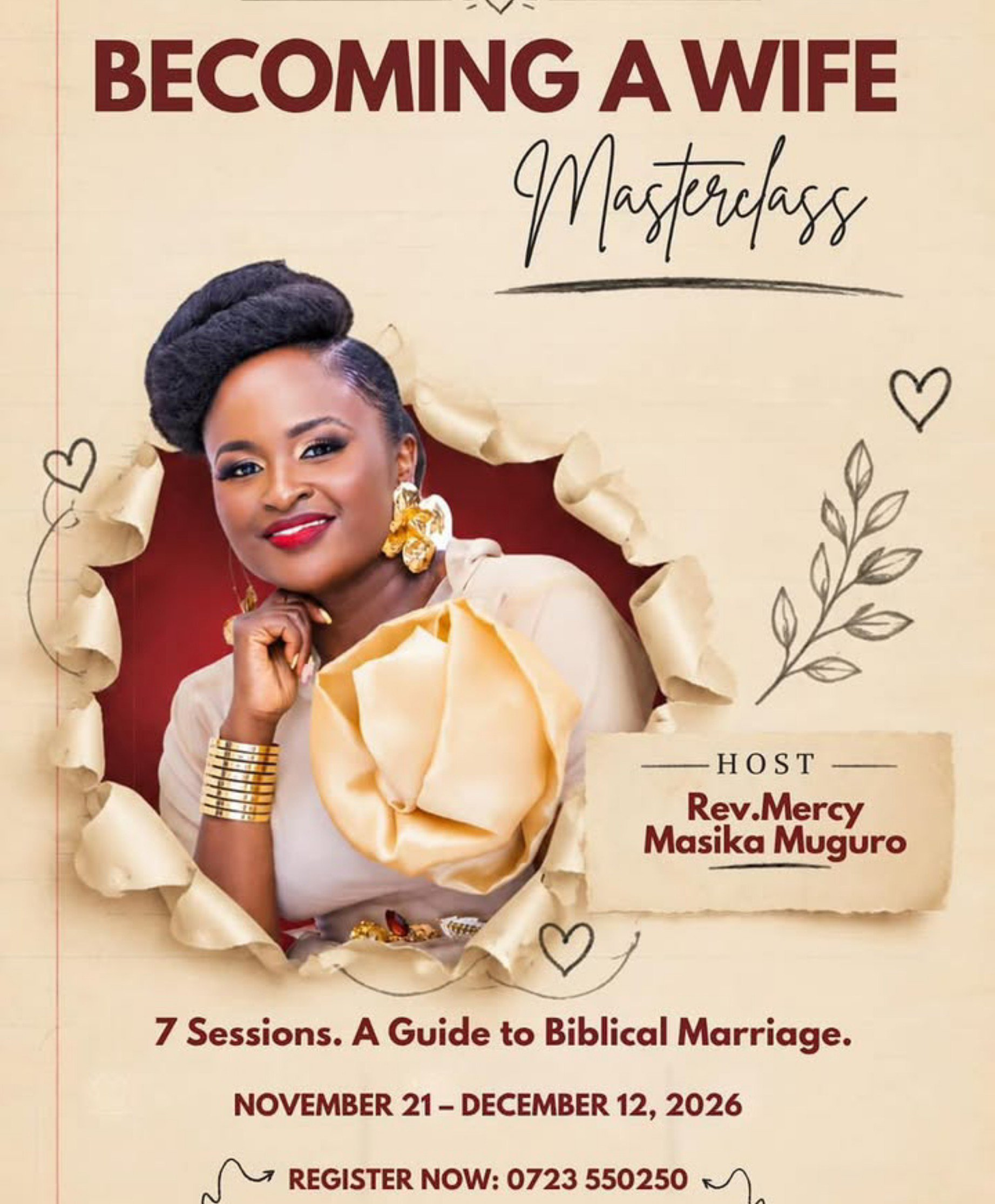
Kenyan gospel singer and newly ordained Reverend Mercy Masika Muguro has ignited a lively online debate with the launch of a seven-session “Becoming a Wife” programme running from November 21 to December 12, 2026. Drawing on biblical teaching and her own early marriage experiences, the sessions aim to help women build stronger unions, but reactions range from earnest support to open mockery. K24
Masika, known for hits such as “Mwema” and her work as a worship leader, announced the programme on Instagram for “every woman who believes marriage shouldn’t be miserable, who wants to get it right, and who trusts that God’s way is best.” She promised participants would “never regret choosing His design” and directed interested women to WhatsApp for details. The curriculum reportedly focuses on scriptural principles for marriage, informed by her personal journey of depression, struggles with the concept of submission, and nearly packing her bags multiple times in the early years of her roughly 18-year marriage to Reverend David Muguro. K24
The couple, both recently ordained, have spoken publicly about those challenges before. Masika has credited mentorship from figures such as Reverend Kathy Kiuna with helping her settle into marriage and later described submission as honouring rather than oppression, something she said made her feel “extremely powerful.” She is also the daughter of a bishop (with a mother who is a reverend and singer), a background some online commentators noted when reacting to the new program. Ghafla
Social media responses have been swift and polarised. Critics mocked the idea with comments such as “Ati masterclass” accompanied by laughter emojis, questioning why women need classes on becoming wives and whether similar programmes exist for men learning to be husbands. Others suggested the initiative places undue responsibility on women to make marriages work while Kenya continues broader conversations about gender roles and marital expectations. One widely shared reaction asked whether Masika had “left singing to teach people how to become good wives.” X
Supporters, however, framed the sessions as practical, faith-based advice grounded in lived experience rather than abstract theory. They pointed to Masika’s openness about her rocky start and her long-lasting marriage as credentials that could help other women avoid similar misery through scripture-centred guidance.
The debate reflects wider tensions in Kenyan discussions of marriage, where traditional and biblical models of roles sometimes clash with contemporary calls for more equal partnerships. Masika’s programme, positioned explicitly around “God’s design,” has become the latest flashpoint in that ongoing conversation.