
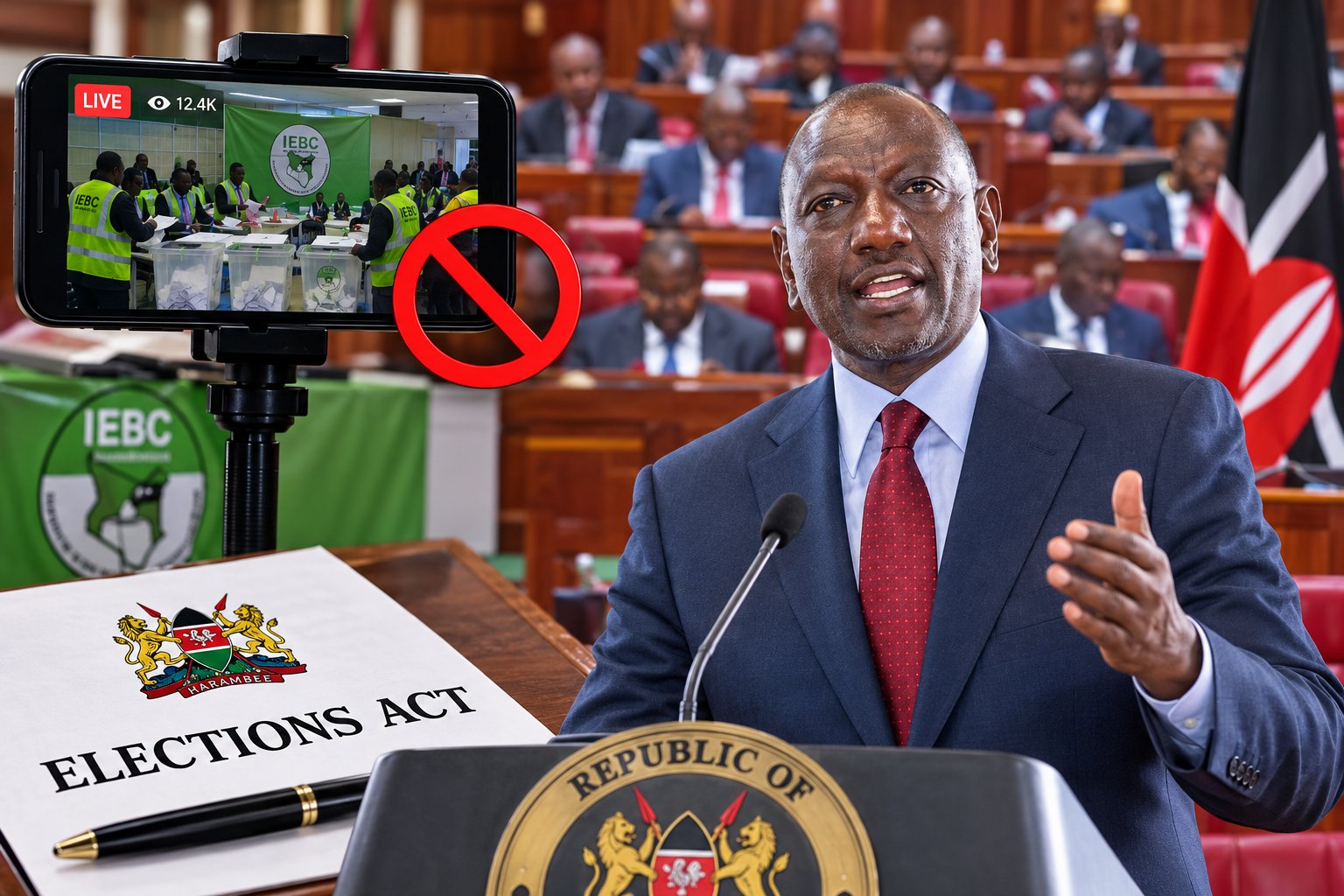
Nairobi, October 23, 2026 — Kenya’s National Assembly has approved the Elections (Amendment) (No. 2) Bill, 2024, removing the legal requirement for the Independent Electoral and Boundaries Commission (IEBC) to livestream results as they are announced at polling stations. youtube.com
The measure, which passed its third reading on Thursday afternoon, eliminates the duty previously set out in Section 39 of the Elections Act for the commission to establish a mechanism for the public live streaming of polling-station announcements. The bill originated in the Senate, where it passed in December 2024, and was co-sponsored by Senate Majority Leader Aaron Cheruiyot and Minority Leader Stewart Madzayo as part of proposals from the National Dialogue Committee formed after the disputed 2022 election. citizen.digital
Under the approved text, results declared at the polling station remain final. The IEBC must still electronically transmit results (with timelines for presidential tallies to constituency and national centres, candidates, agents, and observers), physically deliver tabulated forms where needed, verify them against the polling-station declarations, and publish the scanned statutory forms (including Forms 34A) on its public portal. The change does not outlaw livestreaming outright; the commission could still choose to provide it, but it would no longer be legally compelled to do so. youtube.com
Supporters argue that the official record is the signed statutory form completed at the polling station, not a live video feed, and that electronic transmission plus the public portal already supply transparency and verifiability. They note that related provisions had previously faced court challenges, including a 2018 High Court ruling (later upheld) that struck down language limiting streamed results to “public information only.” Critics counter that the live feed, introduced after the 2007–08 post-election violence that killed more than 1,000 people, acts as a public check and deterrent against discrepancies between local announcements and national tallies. They warn that removing the legal obligation could weaken public scrutiny ahead of the August 10, 2027, General Election, especially if the IEBC faces operational or political pressure. citizen.digital
The IEBC has previously stated it did not propose or sponsor a ban on live streaming and has affirmed its commitment to transparency and media access. Media reports and parliamentary observers have nevertheless highlighted the move as a significant shift in the legal framework governing public access to the results process. standardmedia.co.ke
The bill now moves toward presidential assent. If the National Assembly version differs from the Senate text, the two houses may need to reconcile differences. Civil society groups and opposition figures have already signalled possible legal challenges, citing concerns over electoral transparency in a country with a history of contested results.