
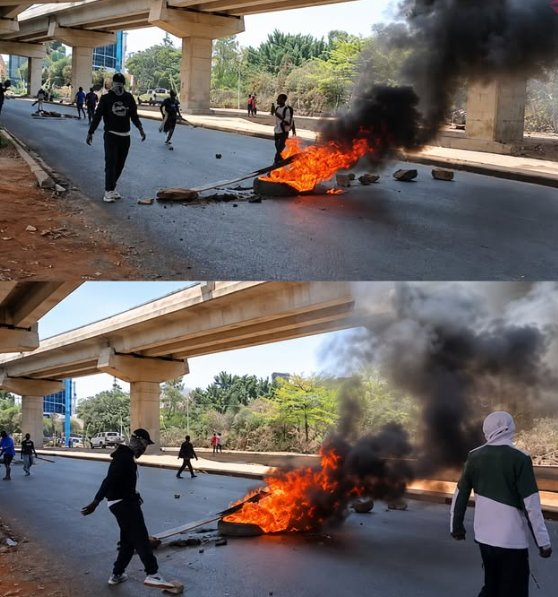
University of Nairobi students on Wednesday afternoon blocked sections of Waiyaki Way and other Nairobi roads, lighting bonfires, burning tyres, and barricading the highway with stones as they demanded an immediate end to the ongoing lecturers’ strike.
The protests paralysed traffic along the busy route, forcing motorists onto alternative paths. Students marched with placards, twigs, and whistles while chanting slogans, saying the prolonged industrial action has disrupted lectures, delayed examinations, and created uncertainty about the completion of their academic programmes.
The demonstrations followed a 72-hour ultimatum issued last Friday by the University of Nairobi Students Association (UNSA). UNSA President Ahmed Rashid warned that students would take to the streets and march toward the Ministry of Education if the government failed to resolve the dispute by Wednesday, October 21. Student leaders argued that learners should not continue to bear the consequences of a standoff between university staff and the state.
The nationwide lecturers’ strike, organised primarily by the Universities Academic Staff Union (UASU) and allied unions, began on October 2 after negotiations stalled on the 2025–2029 Collective Bargaining Agreement (CBA). Lecturers are seeking negotiation, signing, and full implementation of the agreement, which covers salaries, allowances, and other employment terms, along with a clear financial commitment from the National Treasury. Earlier government counter-offers, including figures around Sh12 billion, were rejected by the unions.
Reports also indicated activity along Uhuru Highway as students expanded their protests. The action highlights growing student frustration over lost learning time nearly three weeks into the strike. While some reports on Wednesday suggested progress toward a return-to-work formula involving Labour Cabinet Secretary Alfred Mutua and other officials, the students proceeded with their street action amid continued uncertainty.
The scenes on Waiyaki Way underline the ripple effects of the industrial dispute on both higher education and daily life in the capital.