
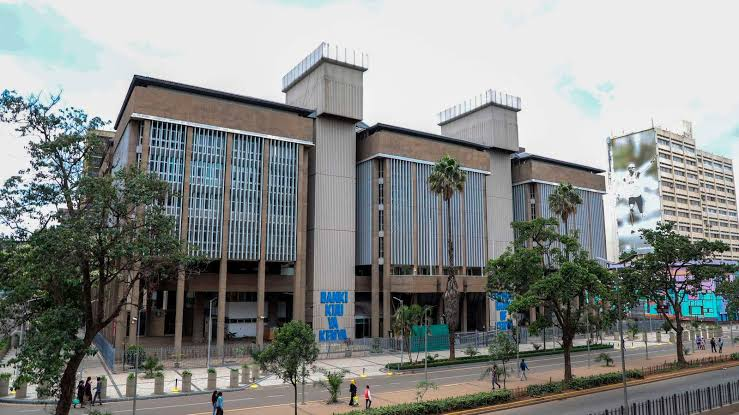
The Central Bank of Kenya (CBK) expects the country’s economy to expand by 5.3% in 2027, an improvement from a revised projection of 5.0% in 2026. Growth is expected to be supported by industry, services, and agriculture.
The outlook was presented by CBK Governor Kamau Thugge following the Monetary Policy Committee (MPC) meeting on 7 October 2026, at which the Central Bank Rate was held unchanged at 8.75%. The 2026 forecast was revised upwards from an earlier estimate of 4.9%, reflecting stronger-than-expected performance in the industry and services sectors.
Both years’ projections mark an improvement from the 4.6% growth recorded in 2025.
Sector drivers
- Industry is projected to grow by 5.2% in 2026 before easing to 4.8% in 2027. Support is expected from construction activity linked to the affordable housing programme, ongoing infrastructure projects, settlement of pending bills, and public-private partnerships.
- Services are forecast to expand by 5.6% in 2026 and accelerate to 5.9% in 2027, with digitisation providing additional momentum.
- Agriculture is projected to grow by 3.0% in 2026 and 4.3% in 2027, though performance will remain sensitive to weather conditions.
The economy already showed stronger momentum in the first quarter of 2026, expanding by 5.3% compared with 4.9% in the same period of 2025. Growth was broad-based, with particularly firm contributions from industry and services.
Supporting conditions and risks
Improved access to credit for businesses and households, continued macroeconomic stability, increased government infrastructure spending, and digital innovation are cited as supportive factors. Private-sector credit growth has remained firm, and business surveys conducted in September 2026 showed sustained optimism about economic activity over the next 12 months.
The CBK has cautioned that the outlook remains subject to risks, including prolonged geopolitical tensions, elevated global energy prices, trade policy uncertainty, and the potential impact of the El Niño weather phenomenon. Inflation, which rose to 6.8% in September 2026, is expected to stay within the target range in the near term, supported by monetary policy, government interventions, and a stable exchange rate.
Overall, the projections point to a gradual strengthening of economic activity through 2027, anchored by resilient performance across industry, services, and agriculture, even as external and weather-related uncertainties persist.