NAIROBI, Kenya — The National Treasury has revealed a striking Sh651 billion budget to extend the Standard Gauge Railway (SGR) from Naivasha to Malaba, signaling the immense financial weight of expanding Kenya’s modern rail network. [1]
According to an October 2026 report by the National Treasury, the new figure represents an increase of nearly a third—or Sh148 billion—from an estimate of Sh502.9 billion published just a year ago. The multi-billion shilling project covers a 369-kilometre corridor divided into Phase 2B (Naivasha to Kisumu) and Phase 2C (Kisumu to Malaba), aimed at seamlessly connecting the Port of Mombasa to the Ugandan border. [1, 2]
Funding the Extension
The ballooning budget puts a spotlight on the steep costs of financing high-speed infrastructure. While the Treasury expects Sh618.8 billion of the required funding to come from external financiers, the government is adopting an altered funding blueprint to avoid overloading its balance sheet. [1]
Rather than relying entirely on traditional sovereign debt, the government is employing revenue securitisation. This strategy leverages state revenues, including up to 90% of the Railway Development Levy (RDL), to back long-term infrastructure bonds. The project will be executed by a Chinese contractor, maintaining Beijing’s central role in Kenya’s transport infrastructure but under a restructured, shared-risk framework. [1, 2, 3, 4]
To fast-track the project, the Treasury previously diverted billions of shillings from operational budgets along the existing Mombasa–Naivasha line—including slashing allocations for digital surveillance networks—to inject Sh14 billion of domestic revenue directly into the western corridor development. [1, 2]
Land Acquisition Gathers Pace
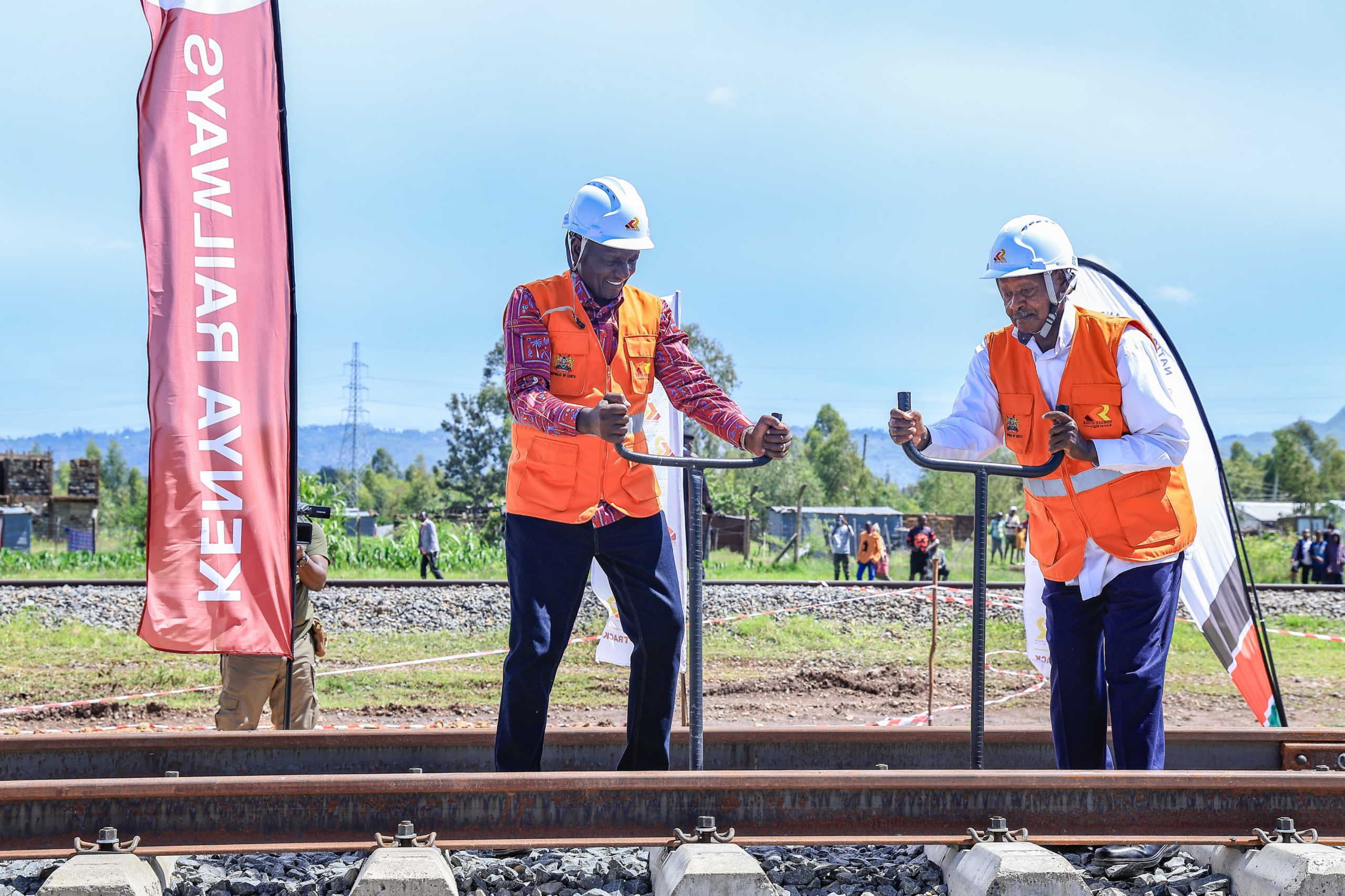
The physical rollout of the line is moving forward following its formal launch by President William Ruto. Construction works initially broke ground in Narok. However, expanding civil works along the rest of the alignment depends heavily on clearing the right-of-way. [1, 2, 3, 4, 5]
The National Land Commission (NLC) has identified over 5,000 acres of land for acquisition across seven critical counties:
Mindful of past land compensation controversies that plagued Phase 1, the government has set aside Sh25 billion explicitly to compensate families and landowners affected by the Narok–Bomet–Kisumu track alignment. Environmental and Social Impact Assessments (ESIA) alongside Resettlement Action Plans (RAP) have already been wrapped up to avoid costly legal gridlocks. [1, 2, 3]
Regional Impact
The administration is banking on the completed network to position Kenya as the logistical heartbeat of East Africa. Once operational, the western extension will feature: 1
A dedicated 8.69-kilometre branch line connecting to the refurbished Kisumu Port.
- Thirteen tunnels and 23 bridges to cut through the challenging terrain of the Great Rift Valley.
- Direct regional connectivity, operating in tandem with Uganda’s parallel rail developments to drastically lower cargo transit costs across the Northern Corridor. 1, 2, 3, 4
Kenya Railways Corporation (KRC) targets full project completion by June 2027, transforming how both cargo and passengers move across East Africa. 1, 2