
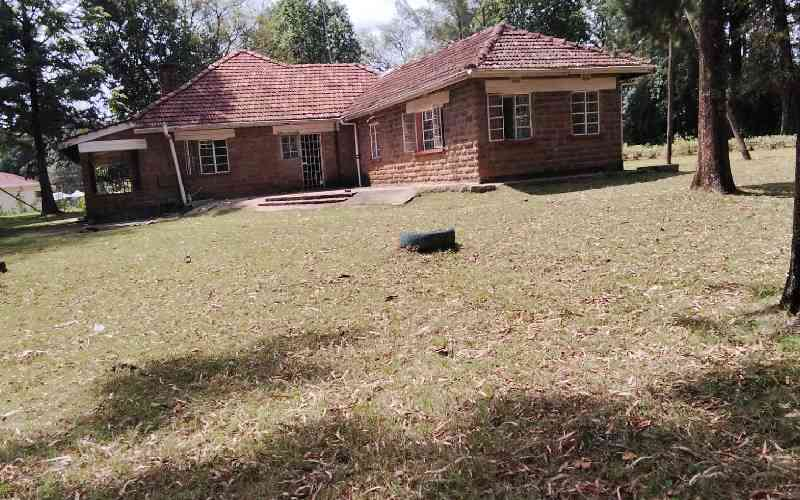
Tensions between the national executive and the family of the late former President Daniel arap Moi have reached unprecedented levels following a sudden security operation in which armed officers from the General Service Unit (GSU) moved to occupy a disputed high-value property associated with the Moi estate. The bold state intervention has drawn intense public scrutiny and ignited sharp debates over property rights, executive power, and political realignments within the Rift Valley region.
Police Deployment and Conflicting Accounts
The security operation unfolded early in the morning when tactical police units established perimeter checkpoints around the estate, restricting access for private farm managers and estate representatives. Government authorities defended the deployment, framing it as an essential public safety measure to secure state-reserved land parcels and prevent unauthorized commercial activity. However, legal representatives acting for the Moi family condemned the occupation as an unlawful administrative action executed without proper court orders or prior notification.
Political Tensions in the Rift Valley
Political observers note that the standoff reflects a deepening political fallout between senior political figures within the ruling administration and established political families in the Rift Valley. Former political alliances have frayed in recent months amidst disagreements over regional development priorities, commercial holdings, and political party leadership structures. The physical entry of armed units onto the property marks a sharp escalation in what was previously a covert legal dispute.
Legal Concerns and Planned Court Action
Civil society organizations and legal scholars have raised concerns over the enforcement methods used during the operation, emphasizing that land disputes involving the state must be resolved through established legal avenues rather than executive force. As the Moi estate attorneys prepare to file emergency injunction applications at the Environment and Land Court, the state occupation remains a focal point for national debates surrounding the rule of law and political tolerance.