
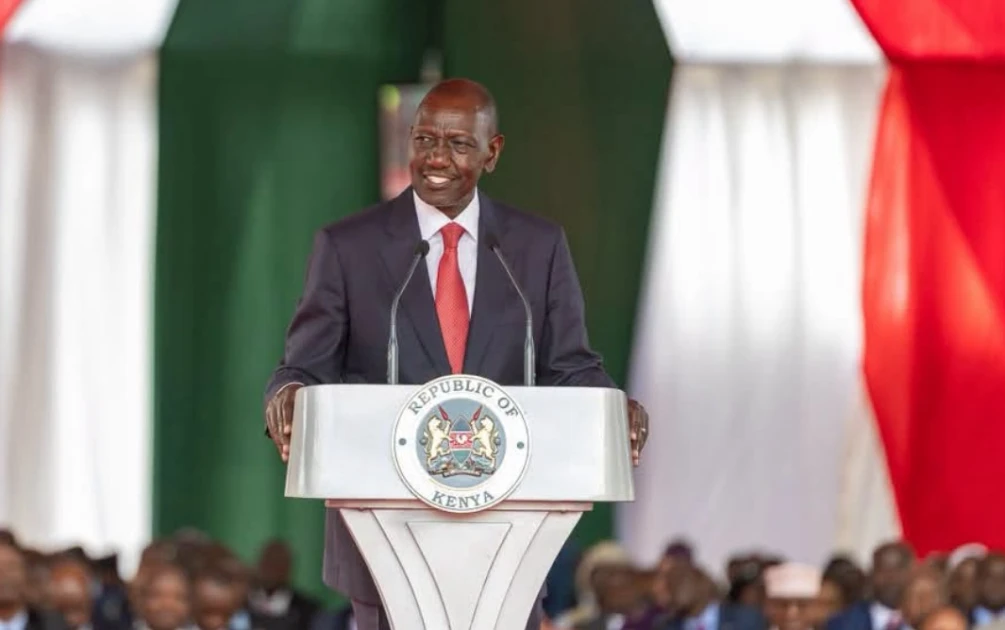
President William Ruto told farmers at this week’s Agriculture and Food Security Transformation Summit that Kenya produced 5.6 billion litres of milk last year, up from about 4.5 billion, and that the country is now Africa’s largest milk producer. The claim landed against a more awkward picture in town: supermarket dairy sections with empty shelves, purchase limits, and packet prices that have climbed toward Sh80.
Ruto links milk production growth to agricultural reforms
Speaking on Thursday, 8 October, at the Jamhuri Park ASK Showground in Nairobi, Ruto tied the rise to four years of agricultural reforms. He said dairy farmers who were paid about Sh35 a litre four years ago are now receiving Sh50 to Sh60, and that the government intends to push that further.
“It’s not just the price going up, we are producing more milk today,” he said. He also credited cheaper fertiliser — subsidised, on his account, from about Sh7,500 a bag to Sh2,000 — with making silage and fodder easier to grow, and said average output per cow had risen from 2.5 kilogrammes a day to more than 5.6.
Different production figures at the agriculture summit
The three-day summit, which ran from 7 to 9 October under the theme of food sovereignty and shared prosperity, was also used by Deputy President Kithure Kindiki to put a slightly different set of figures on the table: production up from 4.6 billion litres to 5.2 billion, a guaranteed minimum return raised from Sh37 to Sh50 a litre, and dairy export value nearly doubling to about Sh9.4 billion. Kenya National Bureau of Statistics data cited in local reporting put 2025 output at about 5.5 billion litres.
The direction of travel is consistent even where the exact totals differ. Ruto’s claim that Kenya has overtaken the rest of the continent as the largest producer is his government’s reading of that growth; earlier official briefings had already described Kenya as accounting for a large share of East African and a notable share of African milk.
Urban milk shortages and falling processor deliveries
The urban market has not felt like a surplus. Spot checks in Nairobi this week found refrigerated shelves bare by mid-morning at some outlets, milk ATMs idle, and staff telling shoppers that arriving after 10 a.m. for fresh packets was a wasted trip.
Retailers have been limiting customers to a handful of packets. Fresh and long-life prices have varied widely by outlet and county; in places a packet or a litre has been reported at Sh75 to Sh80, and higher still for raw milk where it can be found.
Formal deliveries to processors have been slipping: Kenya Dairy Board figures show intake falling from 84.4 million litres in June to 81.3 million in July, with further weakness indicated into August and September.
Drought, feed costs and informal buyers
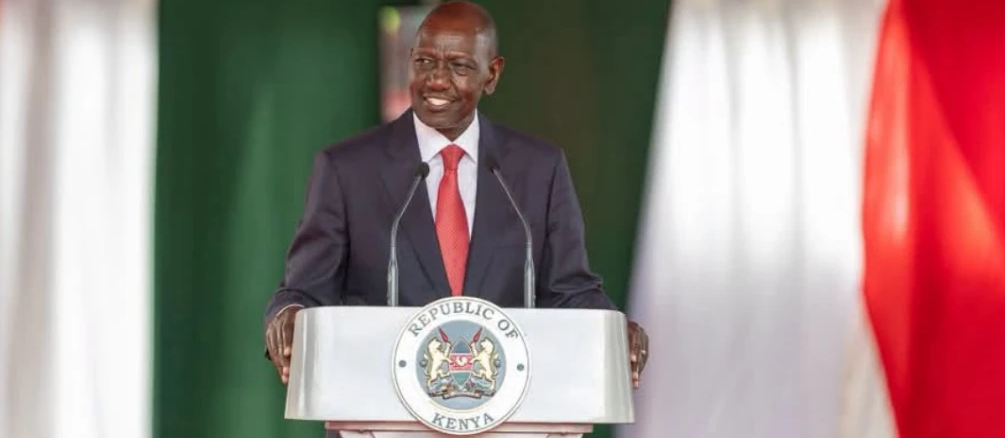
Officials have blamed the squeeze on drought cutting pasture and fodder, a sharp rise in feed costs, and brokers offering farmers more than cooperatives and pulling milk out of the formal chain. Panic buying has compounded thin stocks.
The Dairy Board has described the shortage as temporary and pinned recovery on the October–November–December rains restoring feed in the main dairy zones.
Ruto proposes improved camel breeds and buffalo farming
On Friday Ruto widened the response beyond ordinary dairy cattle, proposing imports of improved camel breeds and the introduction of buffalo farming. He noted that camel milk in Nairobi was selling at around Sh190 to Sh200 — several times the price of cow’s milk — and argued that camels could hold up better in dry areas.
“Currently, we have a slight shortage of milk due to drought,” he said.
Why annual output does not guarantee stocked shelves
The gap the summit did not close is the one shoppers are living with: national output and farm-gate prices can rise while the packet on the shelf disappears. Most of Kenya’s milk still moves outside the formal processor system, so a bigger annual total does not automatically refill urban fridges when pasture fails and informal buyers outbid the factories.
Whether the next rains, the fertiliser subsidy, and any turn to camels and buffaloes narrow that gap is the test the 5.6 billion litre headline now has to pass.