
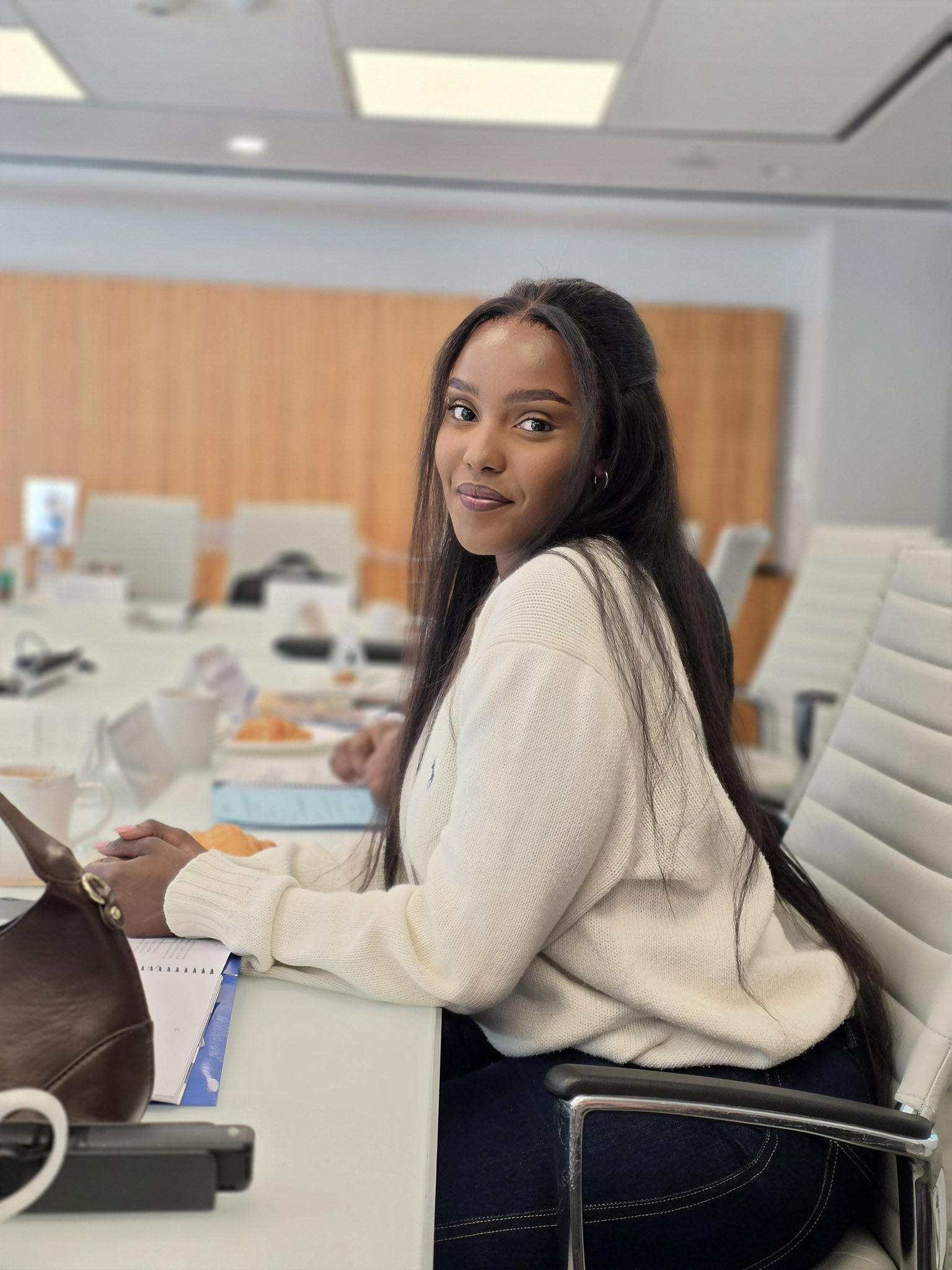
Kenyan award-winning singer and songwriter Nikita Kering’ has been selected for the United States Department of State’s International Visitor Leadership Program (IVLP), a flagship professional exchange that links emerging and established global leaders with American counterparts. Her focus: driving economic growth through Kenya’s music, arts, and broader creative industries.
In a social media announcement this week, Kering’ expressed her honour at joining the programme. “I’m honored to join the U.S. Department of State’s International Visitor Leadership Program (IVLP) to explore opportunities for economic growth through Kenya’s creative industries,” she posted, alongside photos from sessions. One image showed a presentation screen titled “Driving Economic Growth through the Creative Industries – A Project for Kenya.” Other shots captured her in meeting rooms, engaging with materials and participants, underscoring the hands-on nature of the exchange. Hivileo
The IVLP, launched in 1940, is the US government’s premier short-term professional exchange initiative. It brings participants—nominated by US embassies—to the United States for tailored visits that foster mutual understanding, idea-sharing, and network-building. Over the decades, it has hosted more than 200 current and former heads of state, around 1,500 cabinet-level ministers, and leaders from government, business, media, education, the arts, and other fields. Visits are customized to professional interests and often align with broader US foreign policy goals around partnership and capacity-building. Tnx
For Kering’, the programme centers on practical pathways to strengthen support for young artists and scale Kenya’s creative sector. She has drawn publicly on her own early experiences in the industry. Born Nikita Chepchumba Kering’ in Nairobi in 2002, she began performing as a young child—entertaining at events from age three and gaining wider notice around 2011–2012 when she performed at gospel artist Emmy Kosgei’s album launch. Mentored early by Kosgei, she balanced school (including time at Brookhouse International School on a partial scholarship supporting her music) with performances, TV and radio work, and later mentorship opportunities such as Mr Eazi’s emPawa Africa programme. That exposure helped fund her early video work and launched hits that brought awards, including recognition at the All Africa Music Awards and Pulse Music Video Awards.
Kering’ has spoken openly in past interviews about the challenges of early fame: the pressure of public scrutiny from a young age, the loss of a conventional childhood, mental health strains, and the difficulties navigating an industry that often underpays or under-supports emerging talent. Those personal experiences appear to inform her current emphasis on creating structured mentorship paths and better systems for young Kenyan artists. She previously took part in the 2025 US-Kenya Creative Economy Forum as a panellist, discussing innovation, technology, global distribution, collaboration, and revenue opportunities. In 2025 she also advocated at the African Union headquarters in Addis Ababa for fairer compensation from collective management organisations and digital platforms, stronger intellectual property protections, and better support for African creators. Pulse
Her IVLP participation arrives at a moment of growing recognition for Africa’s creative economy. Recent estimates place its value at around $60 billion—roughly 2 percent of the global creative industries—according to figures cited by Afreximbank and the United Nations Economic Commission for Africa. The sector spans music, film, fashion, digital content, design, and more, and is seen as a major engine for jobs, income generation, youth employment, and cultural soft power. Experts and institutions repeatedly highlight the need for stronger intellectual property frameworks, better distribution and market access, branding, financing, and infrastructure so that more of the value created by African talent stays on the continent. Thehighstreetjournal
Supporters view Kering’s selection as a clear win for Kenyan and African talent. They see it as an opportunity to import practical ideas, build international networks, and translate creative excellence into sustainable economic growth and opportunities for the next generation of artists. Some online reactions celebrated the milestone and noted that similar high-level access would be welcomed by many in the industry.
At the same time, the announcement has triggered lively debate and criticism on platforms such as X. Some users questioned the programme’s intentions, framing it as a form of foreign influence, “social engineering,” or an effort to shape African cultural and political narratives. Comments referenced broader concerns about external involvement in African creative and political spaces, with phrases like “puppet show,” “infiltrate,” and skepticism about projects framed as “for Kenya.” Others defended the move, arguing that declining such platforms would be shortsighted and that artists should seize every chance to advance the sector’s professionalization and global reach. The exchange has highlighted ongoing tensions around sovereignty, cultural autonomy, and the role of international partnerships in Africa’s creative industries. Tnx
Kering’ has built a reputation not only as a performer blending R&B, pop, and other influences but also as an emerging advocate for structural improvements in the creative economy. Her IVLP involvement continues that trajectory, focusing on mentorship systems informed by her own path and on strategies that could help turn Kenya’s (and Africa’s) abundant creative talent into stronger economic outcomes.
As the programme progresses, attention will likely remain on what concrete ideas, partnerships, or initiatives she brings back, and how they intersect with local efforts already underway to professionalize music, protect intellectual property, improve royalties, and expand opportunities for young artists. In a $60 billion continental creative economy still punching below its potential weight, voices like Kering’s—rooted in lived experience and now connected to international leadership networks—are part of a broader conversation about ownership, growth, and the future of African creativity.