
Nyeri, Kenya – November 4, 2026
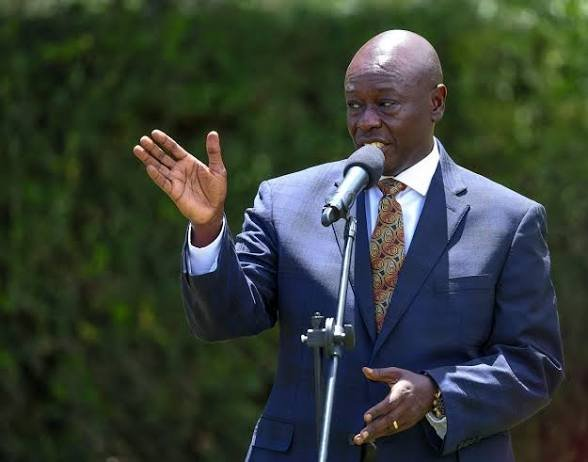
Democracy for the Citizens Party (DCP) leader and former Deputy President Rigathi Gachagua used his address at his Wamunyoro residence in Nyeri on Wednesday to reaffirm his strategy of building overwhelming parliamentary and senatorial strength, drawing explicit inspiration from the late Raila Odinga’s political playbook.
Speaking while engaging a delegation from Gilgil and outlining plans to establish “Wamunyoro annexes” in Nakuru and Meru, two of the region’s most vote-rich counties, each with over one million registered voters, Gachagua stressed the need for DCP to dominate elective seats across Mount Kenya. He announced he would spend three weeks intensively campaigning in Nakuru to “paint the region green,” while expanding coordination centres closer to voters.
The remarks form part of a consistent message he has delivered in recent weeks: that control of the National Assembly and Senate is essential for political relevance, whether the opposition wins the presidency in 2027 or not. Earlier, Gachagua had openly stated he was borrowing Raila’s model of building a strong party that remains influential after elections. He has targeted at least 100 MPs under DCP, a clean sweep of governors in the region, and a majority of MCAs, arguing that such numbers allow leaders to “negotiate from a position of strength and speak with one voice.”
In the August 2026 church address in Kiambu that first outlined the approach, Gachagua praised Raila’s ability to stay relevant: “We didn’t like Raila very much on this side, but he was a wise old man. He built very strong parties and even when he was not elected President, there was no government he did not join.” He noted that Raila would go home after elections and wait to be invited into government — or mobilise street pressure until a deal was struck. Gachagua has said DCP intends to replicate that by commanding strong representation in both the National Assembly and the Senate.
Today’s address tied the strategy to ongoing grassroots work. Gachagua has repeatedly insisted that “the science of politics is numbers” and that presidential tickets or coalition positions cannot be decided in hotels or on television. He has pushed fellow opposition figures to deliver concrete voter blocs — citing estimates of millions of votes from allies such as Edwin Sifuna, Kalonzo Musyoka and Eugene Wamalwa — while consolidating his own Mount Kenya base.
Analysts note that securing large numbers of MPs and senators would give Gachagua leverage over legislation, committee assignments, budget processes and coalition bargaining, regardless of who ultimately carries the opposition flag or wins State House. He has framed the approach as protection against the vulnerability the region experienced after his 2025 impeachment, when limited numbers left Mount Kenya exposed.
The former Deputy President’s Wamunyoro meetings have become a hub for opposition consultations, including recent talks with Charity Ngilu on the 2002 NARC coalition model and earlier engagements with Kalonzo Musyoka and Linda Mwananchi leaders. While publicly affirming that the United Opposition will field one presidential candidate against President William Ruto, Gachagua has made clear that parliamentary and senatorial control remains a parallel and non-negotiable priority.
By expanding physical presence in Nakuru and Meru and repeatedly invoking the need for “foot soldiers” in the House and Senate, Gachagua is signalling that his 2027 plan is not limited to the presidency. It is also about ensuring DCP — and by extension the Mount Kenya region — holds the kind of institutional power Raila Odinga exercised for decades through ODM.