
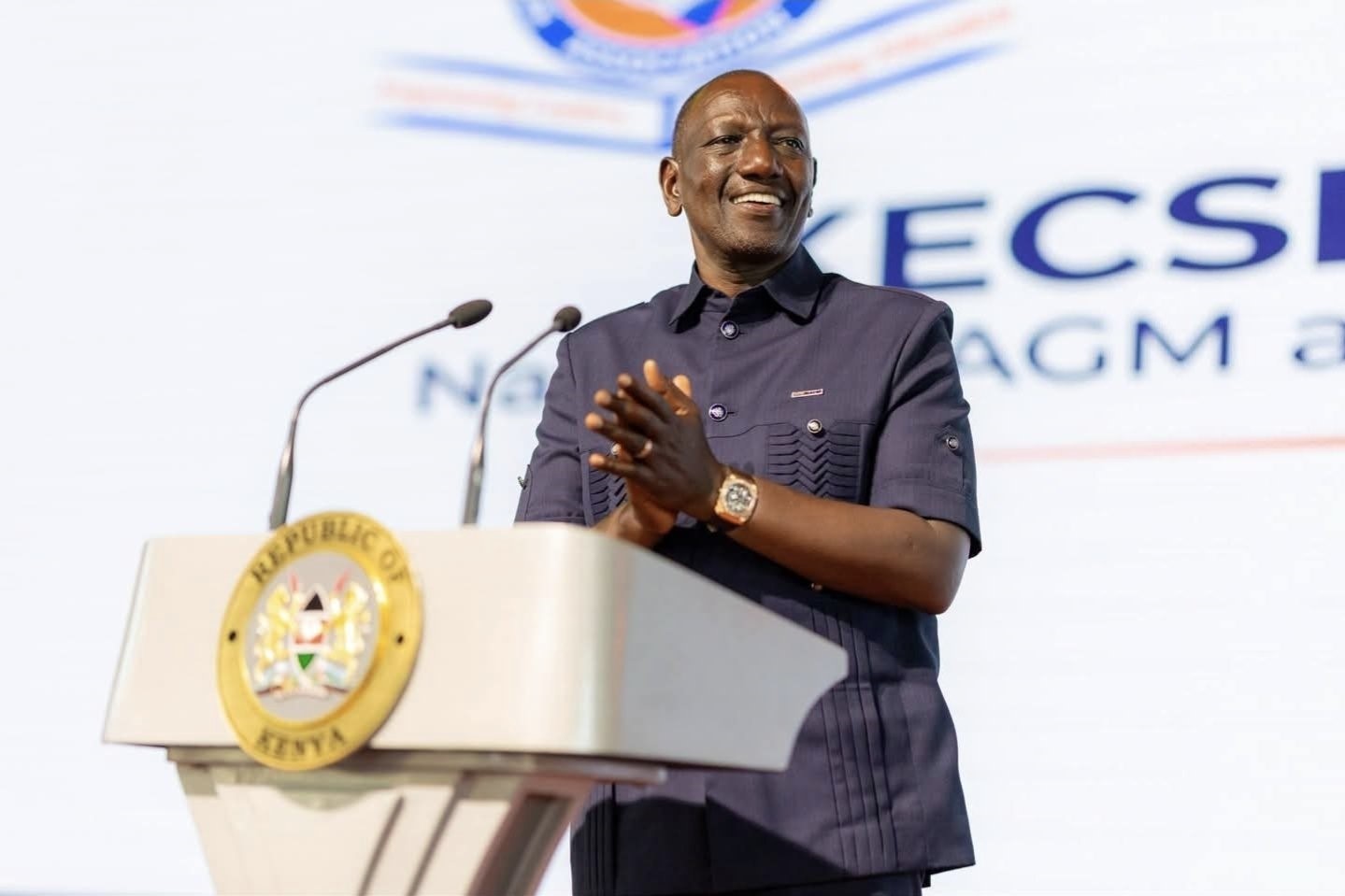
President William Ruto has directed the Ministry of Education to review and propose a further upward adjustment of primary school capitation grants, even after the government raised the allocation from Ksh 1,400 to Ksh 2,340 per learner.
Speaking on Thursday, November 12, 2026, during the Kenya Comprehensive School Heads Association (KESSHA) Annual General Meeting and Conference at the Sheikh Zayed Children Welfare Centre in Nyali, Mombasa, the President acknowledged the recent increase but stressed that more support is needed.
“Although the Government increased primary school capitation from Ksh 1,400 to Ksh 2,340 per learner, it was important that this be reviewed to further improve teaching and learning in schools,” he said. He cited inflation and rising operational pressures as key reasons for the additional review. Kbc
Ruto instructed Education Cabinet Secretary Julius Ogamba, the Teachers Service Commission (TSC), teachers’ unions, and school heads to work together on the proposal. He expects a detailed report on his desk by January 2027 so he can decide on the way forward before the next school year begins.
Timely Funding and Structural Reforms
The President highlighted progress in the disbursement of capitation funds. He noted that the government released Ksh 44 billion in January, Ksh 23.4 billion in April, and Ksh 18.5 billion in August 2026. Going forward, funds will be released before schools open so that head teachers can focus on teaching and learning in the first week of term rather than chasing payments.
Ruto also announced plans to merge primary and junior secondary school capitation into a single funding model for the new Comprehensive Schools structure. This is part of broader reforms to the Basic Education Act aimed at placing governance, staffing, and financing of these institutions on a stronger legal foundation.
Background to the Increase
The rise from approximately Ksh 1,400–1,420 to Ksh 2,340 per primary learner was earlier directed by the President and confirmed by Basic Education Principal Secretary Julius Bitok for implementation in the 2026/2027 financial year. It marked the first significant review of Free Primary Education funding in many years and was intended to ease financial pressure on public schools amid rising costs linked to the Competency-Based Education (CBE) system.
Education stakeholders have generally welcomed the higher allocation and the improved timing of disbursements, though many continue to argue that inflation has eroded the real value of the grants and that further increases are necessary for quality teaching materials, infrastructure maintenance, and overall learning outcomes.
The President’s latest directive signals that the government remains open to additional support for basic education while pushing structural changes in how schools are funded and managed. School heads and education officials are now expected to prepare data-driven recommendations ahead of the January 2027 deadline.