
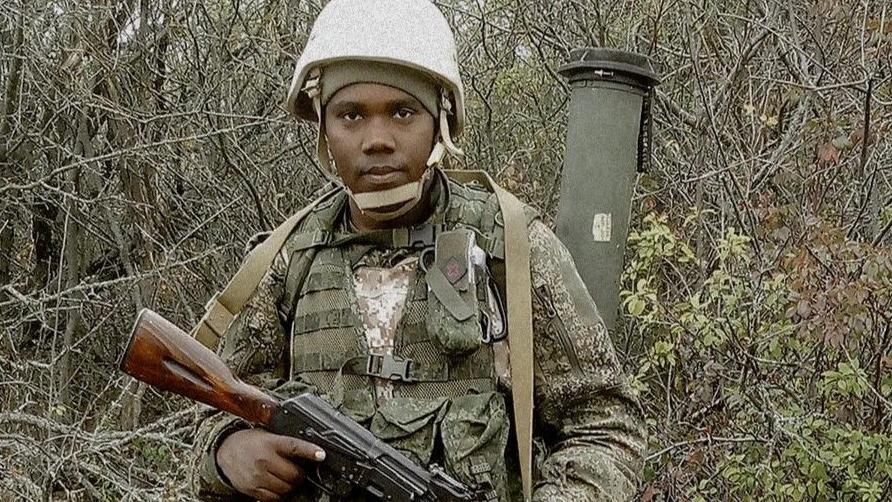
A newly released U.S. State Department report has linked some Kenyan government officials to the fraudulent recruitment of more than 1,000 Kenyan men to fight for the Russian military in the war against Ukraine.
Alleged collusion in the 2026 trafficking report
The 2026 Trafficking in Persons Report, published on October 8, states that officials reported collusion between certain Kenyan officials, recruitment agencies, and Russian government officials. According to the report, Kenyan men were lured with promises of high-paying jobs in security or construction and later coerced into signing contracts with Russia’s Ministry of Defense.
“Officials reported some Kenyan officials colluded with recruitment agencies and government officials from Russia to facilitate the fraudulent recruitment of more than 1,000 Kenyan men to fight for the Russian military in the Russia-Ukraine war,” the report says. It adds that more than 1,000 Kenyan men were fraudulently recruited in this manner.
Kenya’s Tier 2 ranking and accountability concerns
Kenya remains on Tier 2 in the annual ranking, meaning the government does not fully meet minimum standards for eliminating trafficking but is making significant efforts. The report criticizes the response to the Russia-related cases specifically.
It states that the government “did not report taking action against recruitment agencies reportedly owned by government employees that were allegedly complicit in facilitating trafficking crimes,” and that lesser charges, such as failure to register a recruitment company, were frequently applied instead.
The report also cites Kenyan media claims that more than 10 percent of government officials hold ownership interests in private employment agencies, raising conflict-of-interest concerns. Separately, it notes that authorities investigated three Ministry of Labour officials over alleged bribes linked to trafficking.
Reported forced labor in drone production
The findings extend beyond combat roles. The report describes unscrupulous actors, including Russian officials and illicit recruiters, fraudulently recruiting women aged 18–22 from Africa (including Kenya), South Asia, and South America under the pretext of vocational training, then placing them in military drone production facilities.
Workers at these sites reportedly faced hazardous conditions, surveillance, wage and hour violations, contract switching, and recruitment fees—indicators of forced labor.
Earlier Kenyan intelligence findings
The U.S. assessment echoes earlier Kenyan findings. In February 2026, a National Intelligence Service report tabled in Parliament by Majority Leader Kimani Ichung’wah stated that more than 1,000 Kenyans had been recruited.
It described a network involving rogue officers from immigration, the Directorate of Criminal Investigations, the National Employment Authority, and airport staff, along with alleged facilitation linked to the Russian Embassy in Nairobi and Kenya’s Embassy in Moscow. Recruits—often former military or police personnel and unemployed men aged 20–50—were promised monthly pay of up to KSh 350,000 plus large bonuses and, in some accounts, eventual citizenship.
Mudavadi’s figures on Kenyans linked to the conflict
Official numbers have since varied. On October 8, Prime Cabinet Secretary and Foreign Affairs Cabinet Secretary Musalia Mudavadi told a Senate committee that government records list 354 Kenyans linked to the conflict.
Of these, 84 were classified as killed or missing in action, 77 remained on the front lines, 38 were in camps, 52 had unknown or unclassified locations, 34 were hospitalized, 62 had been repatriated, five were prisoners of war in Ukraine, one was in detention, and one had completed a contract. Mudavadi said many reported being lured by job offers before ending up in military service, and the government has argued that some cases may meet the definition of trafficking under the Palermo Protocol.
Diplomatic engagement and Russia’s response
He also stated that following diplomatic engagement in Moscow in March 2026, Kenyan nationals were placed on a Russian “Stop List,” and Kenya’s embassy has confirmed no further enlistments into the “Special Military Operation.” The Russian Embassy in Nairobi has previously denied involvement in recruitment, calling earlier accusations part of a propaganda campaign.
Recruitment estimates and families’ demands
The scale of African recruitment has drawn wider attention. Independent tallies and earlier intelligence estimates have placed Kenya among the countries with the largest numbers of nationals drawn into Russian forces since 2022, though confirmed figures remain lower than the initial “more than 1,000” claims and continue to be updated as families report missing relatives.
Families of those affected have pressed for stronger action, including repatriation of the living and return of remains, ahead of Kenya’s participation in the Russia-Africa Summit later in October. The U.S. report adds an external assessment that some Kenyan officials and agency owners were part of the facilitation network, and that accountability has so far been limited.