
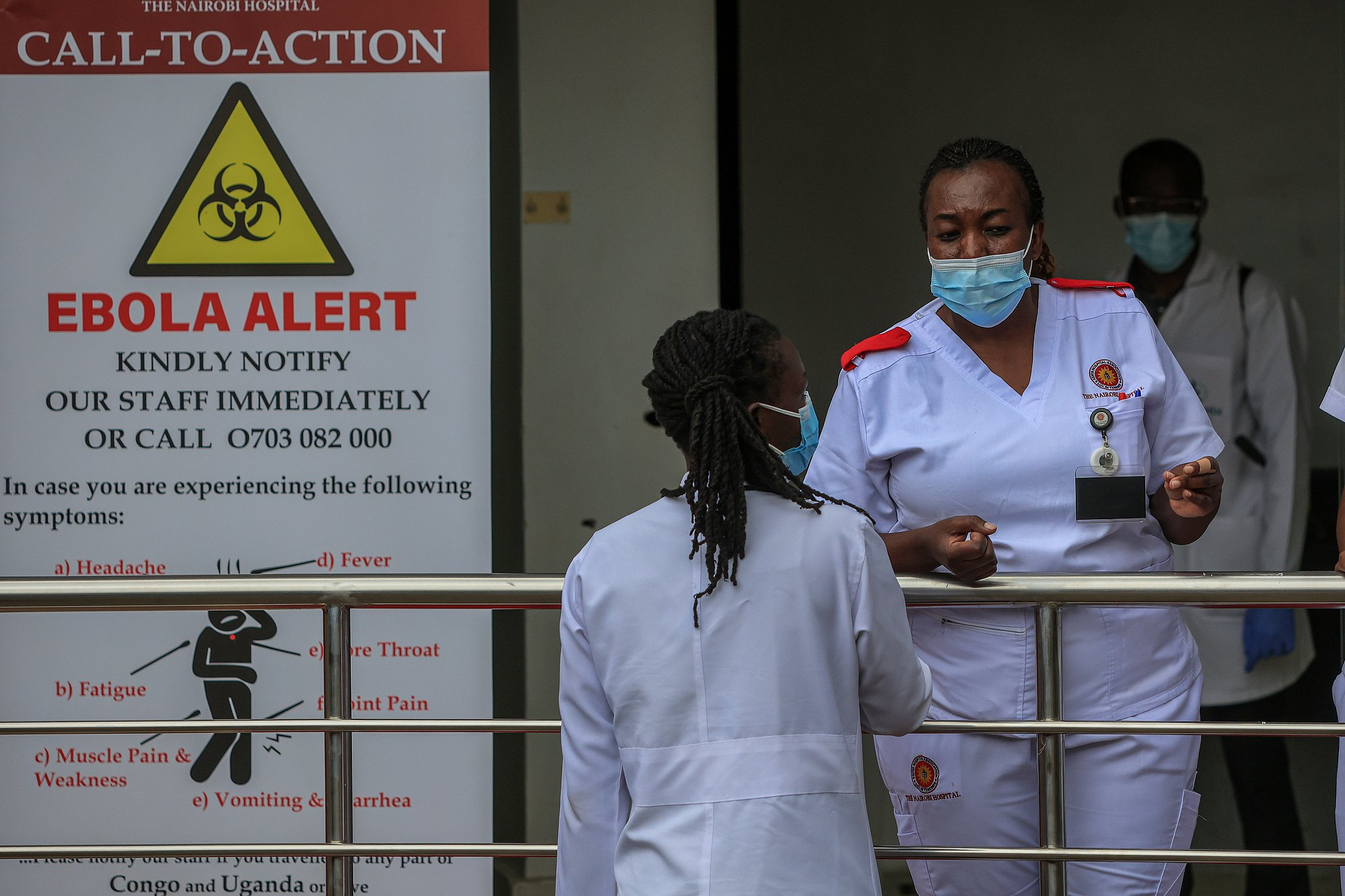
Nairobi — Kenya’s Ministry of Health has confirmed one additional Ebola case, bringing the country’s total to nine, all linked to a single cluster with no evidence of wider transmission.
The latest patient is a 24-year-old man and a close family member of the index case, the Kenyan man who died in Nairobi on October 5 after travelling from the Democratic Republic of Congo via Uganda. The new patient was already under quarantine when he developed symptoms and tested positive on October 19. He was isolated immediately and started on treatment.
Director-General for Health Dr Patrick Amoth said all nine cases belong to one known cluster. “As of today there is no evidence of transmission outside this group,” he stated. Of the eight surviving patients, all are reported stable and responding well to treatment. The ministry said it had received 500 doses of medicines to support care for confirmed cases.
Contact tracing has identified 135 people linked to the cases. As of Tuesday, 134 (99.3 per cent) had been traced and placed in quarantine. The first group of contacts, who entered quarantine around October 6, is expected to complete the 21-day monitoring period starting October 25 and may return home if they remain symptom-free. The ministry urged communities to welcome them back, noting that those who complete monitoring without symptoms pose no risk of infection.
Kenya’s outbreak began with the imported index case, a man in his forties who had lived in the DRC, fell ill there, travelled through Uganda and arrived in Nairobi on October 3 before dying two days later. Subsequent infections have occurred among relatives and health workers who treated him — all detected while already under quarantine. The cases involve the Bundibugyo strain of Ebola, for which there are no approved vaccines or specific treatments; care remains supportive.
The update comes a day after the United States raised its travel advisory for Kenya to Level 3 (“Reconsider Travel”), citing health risks. The World Health Organization has continued to advise against travel or trade restrictions on Kenya based on available information, while Kenyan authorities maintain heightened screening and surveillance at borders and airports.