
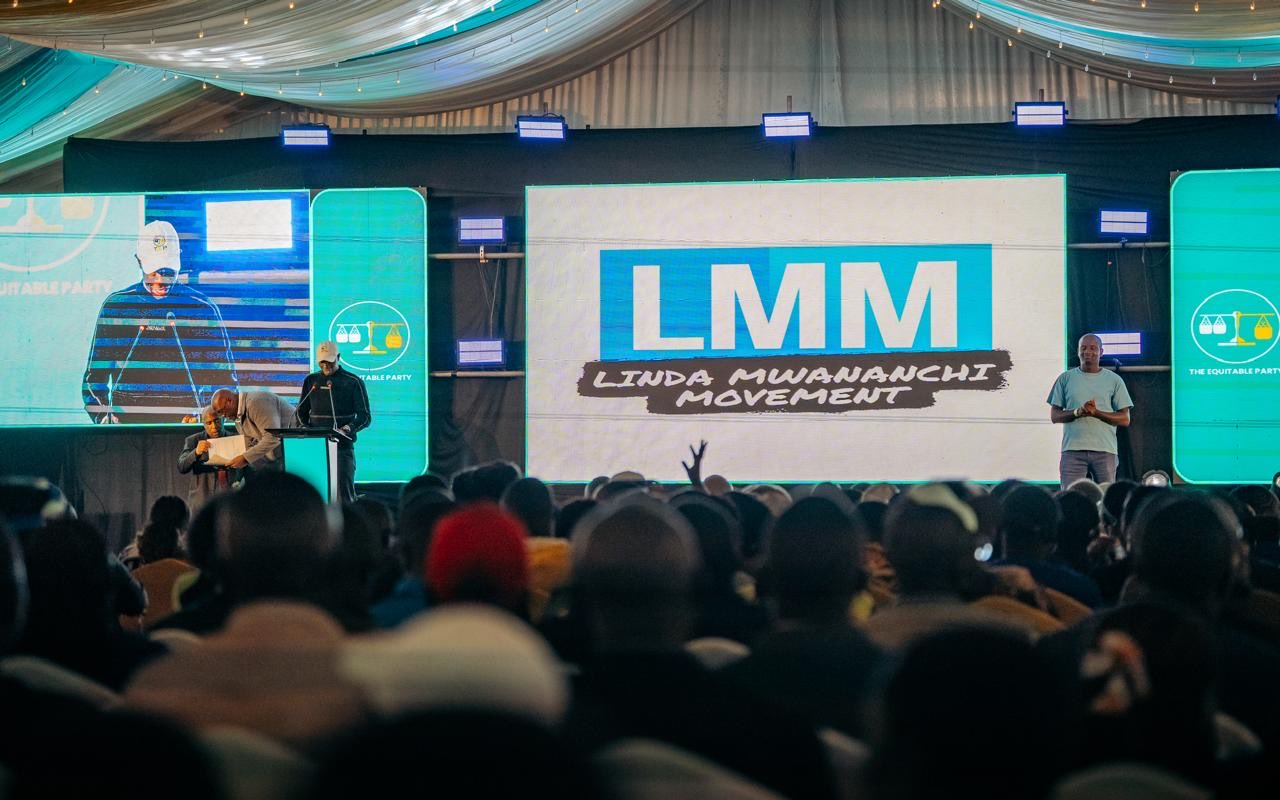
The Linda Mwananchi Movement (LMM), now a registered political party under Nairobi Senator Edwin Sifuna’s leadership, traces its roots to deepening fractures within the Orange Democratic Movement (ODM) and a broader wave of public discontent that intensified after the 2024 Finance Bill protests. What began as informal gatherings of opposition figures critical of cooperation with President William Ruto’s administration evolved into a structured mobilisation platform and, ultimately, a formal party vehicle for the 2027 General Election.
The name “Linda Mwananchi,” which translates to “Protect the Citizen” in Swahili, emerged as a counter-narrative to the “Linda Ground” faction within ODM. The latter was associated with party leader Siaya Senator Oburu Oginga and leaders seen as more open to engagement with the ruling Kenya Kwanza administration. Sifuna and his allies positioned Linda Mwananchi as a defence of ordinary Kenyans against high living costs, taxation, and perceived elite accommodation.
Early organisational efforts were credited by Saboti MP Caleb Amisi, who later claimed a founding role. According to Amisi, the initiative initially operated under the banner “Kenya Moja.” He said he contacted Sifuna, Embakasi East MP Babu Owino, and others who had been vocal with the #RutoMustGo slogan, and organised initial meetings. The first gathering took place in Bumula Constituency, followed by events in other western Kenya areas including Saboti. Amisi said he deliberately included a range of leaders, including Nyali MP Mohamed Ali (then still in UDA), Githunguri MP Gathoni Wamuchomba, Anthony Kibagendi, and others, to give the effort a national face. At that stage, the group remained small and was often dismissed by observers.
Sifuna has described the origins somewhat differently, linking the early meetings to the aftermath of the 2024 Finance Bill debates. As ODM secretary-general, he and other MPs had opposed the bill. Subsequent informal consultations among like-minded legislators from ODM and other parties led to local mobilisation meetings. The movement gained clearer identity after Sifuna’s removal as ODM secretary-general. ODM’s National Executive Committee first moved against him in February 2026, citing indiscipline related to public statements that contradicted party positions on cooperation with the government. A second removal process followed later in the year. The Political Parties Disputes Tribunal later upheld aspects of the party’s disciplinary authority.
Raila Odinga’s death in October 2025 further exposed the internal divisions. With the long-time opposition figure no longer serving as a unifying force, the gap between those favouring continued engagement with the government and those insisting on a harder opposition stance widened. Sifuna’s faction intensified grassroots tours under the Linda Mwananchi banner. By early 2026 the movement was holding rallies across multiple counties, attracting youth, civil society actors, and defectors from traditional opposition structures. Online registration drives quickly signed up tens of thousands of supporters. Key early associates included Siaya Governor James Orengo, Vihiga Senator Godfrey Osotsi, Babu Owino, and others.
Throughout 2026 the movement operated largely outside formal party structures, relying on public rallies, social-media mobilisation, and county tours. It presented itself as a citizen-centred alternative focused on accountability, cost-of-living relief, and generational change. Sifuna emerged as its most visible face and, in September 2026, was formally endorsed by the movement’s leadership as its preferred presidential candidate for 2027.
Efforts to register “Linda Mwananchi Movement” as a political party faced legal and administrative hurdles. Competing claims over the name and objections delayed the process. The Registrar of Political Parties initially resisted reservation of the name; the Political Parties Disputes Tribunal later ordered reconsideration, and the name was reserved in early October 2026. In the interim, Sifuna and his allies took over an existing registered party, The Equitable Party (TEP), which was unveiled on 4 October 2026 with Sifuna as party leader. Four days later the TEP National Executive Committee resolved to rebrand it as the Linda Mwananchi Movement. The Office of the Registrar of Political Parties initiated the gazettement process.
On 30 October 2026 the movement launched its national headquarters in Lavington, Nairobi, and unveiled a proposed national leadership team that included Godfrey Osotsi as chairperson, several deputy leaders drawn from different regions, and other officials. Plans were announced to open offices in all 47 counties and to create digital platforms for aspirant applications.
The final formal step occurred on 13 November 2026. At a National Delegates Conference in Nairobi, delegates of The Equitable Party unanimously approved the name change to Linda Mwananchi Movement, together with amendments to the party constitution, colours, symbol, headquarters, and nomination and election rules. The conference also authorised coalition-building efforts. A party statement confirmed the resolutions, describing them as a key milestone in establishing the organisational structure required for the 2027 contest.
From informal anti-government meetings in western Kenya to a fully rebranded political party with national ambitions, the Linda Mwananchi Movement reflects both the internal realignments that followed Raila Odinga’s death and the persistent public pressure for an opposition platform that prioritises citizen welfare over elite bargains. Its trajectory continues to shape Kenya’s pre-2027 political landscape as Sifuna and his allies seek to convert grassroots energy into electoral organisation.
You might like to read also