
Mombasa, November 12, 2026
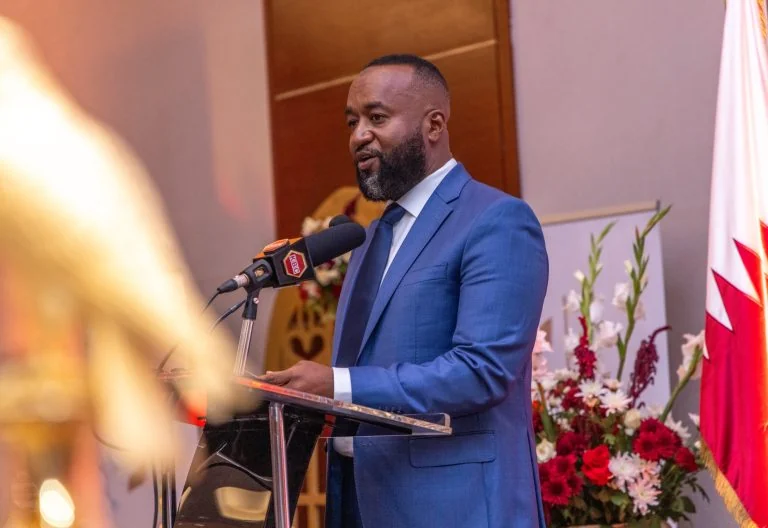
Mining, Blue Economy and Maritime Affairs Cabinet Secretary Hassan Joho used a personal story of academic struggle to underscore the impact of family finances on education outcomes while addressing the Kenya Comprehensive School Heads Association (KECSHA) National Annual General Meeting and Conference in Mombasa on Thursday. Hivileo
Speaking at the gathering of more than 15,000 school heads at the Sheikh Zayed Children Welfare Centre, Joho revealed that he completed Form Four with a D grade in the Kenya Certificate of Secondary Education (KCSE). He insisted the result did not reflect a lack of ability. Peopledaily
“Growing up, I completed Form Four with a D grade, but it was not because I was unintelligent,” he said. Addressing President William Ruto, who was also present, Joho added in a mix of Swahili and English: “Mimi mwenyewe, your Excellency, nilitoka kidato cha nne kama mwanafunzi wa D. Na sio ati nilikuwa mpumbavu. Hata wewe ukininiangalia unajua mimi nilikuwa mwerevu. Hata ukitathmini unaniona hapa unajua huyu ni mjanja.” Peopledaily
Financial Barriers, Not Ability
Joho explained that his family struggled to pay school fees, causing him to miss entire terms. In the system of his time, he argued, a learner’s progress was heavily influenced by a parent’s ability to pay rather than the student’s own potential. Hivileo
He contrasted this with current government approaches: “If I grew up at the time of President William Ruto, where a student ama mwanafunzi hapimwi kwa mfuko wake ama mfuko wa mama yake na babake, ni akili yake, I would definitely be an A student.” He further stated that he “would not have scored a D if I had been President during that time because the main measure of success in school was the financial ability of one’s father.” Hivileo
The remarks align with earlier accounts of Joho’s background. He has previously described being raised by a single mother who sold vegetables, taking on manual work such as carrying heavy sacks at the port while still in school, and dropping out for periods due to lack of fees before returning. He has long maintained that the D grade should not define a person’s future.
Conference Context and Government Efforts
The four-day KECSHA conference, running from November 9 to 12 under the theme “Re-imagining the Comprehensive School of the Future: Strengthening Leadership, Systems, Skills, and Values for Sustainable Quality Education,” has focused on curriculum reforms under the competency-based education system, funding gaps, leadership structures in comprehensive schools, and support for learners. President Ruto was expected to close the event, amid reports of an endorsement from the association alongside demands on funding and related issues. X
Joho’s comments highlighted ongoing government efforts to increase education spending, expand access, and reduce financial barriers so that performance is judged more on intellect and ability than family wealth. This echoes broader policy messaging around ensuring students are not locked out of opportunities due to poverty, including at higher education levels.
Mixed Reactions
The speech has drawn divided responses. Supporters have welcomed it as an authentic success story from a senior government official who rose from modest circumstances, later serving as Mombasa Governor before joining the Cabinet, showing that early academic setbacks need not limit later achievement. They see it as encouragement for students facing similar challenges and a validation of policies aimed at equalising opportunity.
Sceptics, however, have questioned whether leadership positions or political narratives can rewrite past exam results, arguing that a D grade remains a factual outcome regardless of the reasons behind it. Some have noted the long-standing public scrutiny of Joho’s academic credentials, including past allegations (which he has denied and which courts have dismissed) regarding the validity of later qualifications. Others have pointed out that while financial barriers are real for many Kenyan families, individual effort, school quality, and other factors also shape results.
Joho’s intervention at the school heads’ meeting adds a personal dimension to national conversations about education equity, funding, and the role of family background in determining outcomes. As the conference concludes and reforms continue, the episode underscores both the persistence of access challenges and the political framing of efforts to address them.