
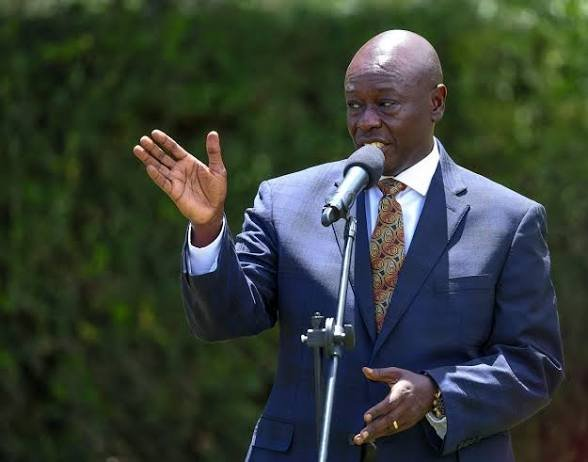
Nairobi, November 4, 2026
Former Deputy President Rigathi Gachagua has withdrawn High Court Constitutional Petition No. E522 of 2024, one of the cases challenging his October 2024 impeachment. His lawyers told the court that key issues in the petition had already been resolved by a related June 2026 judgment, making further litigation unnecessary.
Through his legal team, Gachagua informed the High Court that most matters raised in Petition E522 (described in court proceedings as a lead or related pre-impeachment file) had been addressed in the consolidated post-impeachment judgment in Petition E565 of 2024 and related files. The court had previously indicated that the E565 decision would govern the related matters. Lawyers noted that continuing the case would consume judicial resources without a realistic prospect of a different outcome. Gachagua has already appealed the main June judgment to the Court of Appeal.
Background: Impeachment and the June 2026 Ruling
Gachagua was removed from office on October 17, 2024, after the Senate upheld charges initiated by the National Assembly. He was succeeded by Prof. Kithure Kindiki. Multiple petitions challenged the process on grounds including procedural fairness, bias, public participation, and constitutional compliance. Some earlier pre-impeachment petitions were withdrawn in 2025 as overtaken by events.
On June 8, 2026, a three-judge High Court bench (Justices Eric Ogola, Anthony Mrima, and Frida Mugambi) delivered judgment in the consolidated petitions. The court:
- Declined to quash the Senate’s impeachment resolution, upholding the process as substantially compliant with the Constitution (applying Articles 144, 145, and 150).
- Affirmed the validity of Kindiki’s nomination and assumption of office.
- Found that Gachagua’s fair trial and fair administrative action rights (Articles 47 and 50) were violated when the Senate refused an adjournment despite his hospitalization/illness and proceeded in his absence.
- Awarded him Sh50 million in constitutional damages, payable by the Senate, as vindication and deterrence.
- Urged Parliament to enact specific legislation providing a clear framework for removing a Deputy President under Article 150.
- Ordered each party to bear its own costs.
Gachagua rejected the compensation as inadequate and filed a notice of appeal. In August 2026 filings at the Court of Appeal, he seeks to have the Senate resolution of October 17, 2024, declared unconstitutional, null, and void. He challenges the High Court’s conclusion that the Senate’s decision was final and beyond effective remedy despite the rights violations found, and he raises issues about the judgment record. The appeal remains pending.
Implications for 2027 Presidential Ambitions
The withdrawal of Petition E522 streamlines Gachagua’s legal challenges by focusing resources on the Court of Appeal case rather than duplicative High Court proceedings. It does not resolve the core dispute: the High Court has upheld the impeachment (subject to appeal), and opponents continue to argue that this creates a lasting barrier to public office.
Under Article 75(3) of the Constitution, a person dismissed or otherwise removed from office for contravening provisions on the conduct of State officers (linked to Chapter Six on leadership and integrity) is disqualified from holding any other State office. Impeachment of a Deputy President proceeds under Article 150, applying the presidential removal framework. Presidential candidates must also meet qualifications for election as a Member of Parliament (Article 137 read with Article 99). Article 99 includes disqualification grounds related to Chapter Six violations, with a provision that certain disqualifications do not apply until appeals or reviews are exhausted.
Legal opinion remains divided. Some analysts and politicians argue the upheld impeachment permanently bars Gachagua from elective or appointive State office (including the presidency or even certain party positions), citing the integrity provisions and precedents involving other impeached officials. Others note that the pending appeal leaves his eligibility open under the exhaustion-of-appeals clause, and that courts have not yet issued a final determination on the full scope of any disqualification. The High Court’s decision not to reinstate him (citing the self-executing nature of a successful Senate resolution and the subsequent filling of the office) further complicates any path back to high office.
Politically, Gachagua has remained active as leader of the Democracy for the Citizens Party (DCP). He has positioned himself as a central figure in efforts to build a united opposition front against President William Ruto for the 2027 elections, emphasizing his influence in the Mt Kenya region, mobilizing support, and participating in talks with leaders such as Kalonzo Musyoka and others. He has spoken of the opposition’s need for a single candidate, momentum-building, and his own potential role—either as flagbearer or kingmaker—while criticizing the current administration. The legal cloud from the upheld impeachment (and the associated political narrative of constitutional accountability) provides ammunition to rivals, who can question his eligibility and fitness under leadership and integrity standards. Success on appeal could strengthen his hand; a loss or prolonged uncertainty could constrain a direct presidential bid and force him into a more limited kingmaker or mobilizer role, even as he continues grassroots and coalition activities.
This latest withdrawal marks another tactical adjustment in a multi-year legal and political contest. The decisive next steps for both Gachagua’s eligibility and his 2027 prospects now rest primarily with the Court of Appeal and the evolving opposition dynamics ahead of the general election.